
Safety Breach at Super Junior’s 20th Anniversary Finale: 3 Fans Injured in Barrier Collapse
What was meant to be a historic celebration of two decades in K-pop took a distressing turn last night. During the grand finale of Super Junior’s 20th Anniversary World Tour <SUPER SHOW 10> SJ in Seoul, an unexpected structural failure resulted in the injury of three audience members.
The incident occurred on April 5, 2026, at the KSPO DOME, a venue iconic to the group’s long history. As the members performed their final encore track, a section of the safety railing installed along the side of the seating area gave way, causing three fans to fall from the elevated platform.
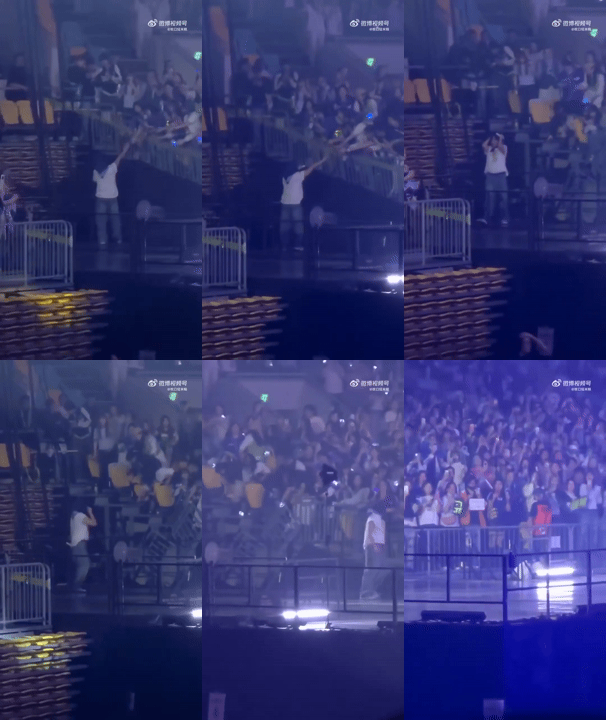
Immediate Response and Medical Status
Following the collapse, onsite medical teams and staff stabilized the affected fans before rushing them to a nearby hospital. On the morning of April 6, SM Entertainment released an official statement confirming the details of the injuries:
“The injured fans underwent immediate thorough examinations. Medical professionals have diagnosed them with sprains and bruising, requiring at least two weeks of rest and outpatient treatment.”
SM Entertainment Takes Full Responsibility
The agency expressed deep regret over the lapse in safety protocols during such a significant milestone for the group. In a heartfelt apology directed to the victims and the broader “E.L.F” fandom, SM Entertainment committed to a comprehensive recovery plan:
- Medical Coverage: The agency will provide full financial support for all medical expenses until the injured fans are completely recovered.
- Accountability: SM acknowledged their “heavy responsibility” as the event organizers for the structural failure.
- Prevention: A rigorous audit of facility safety and spectator management protocols has been ordered to prevent any recurrence in future tour stops.
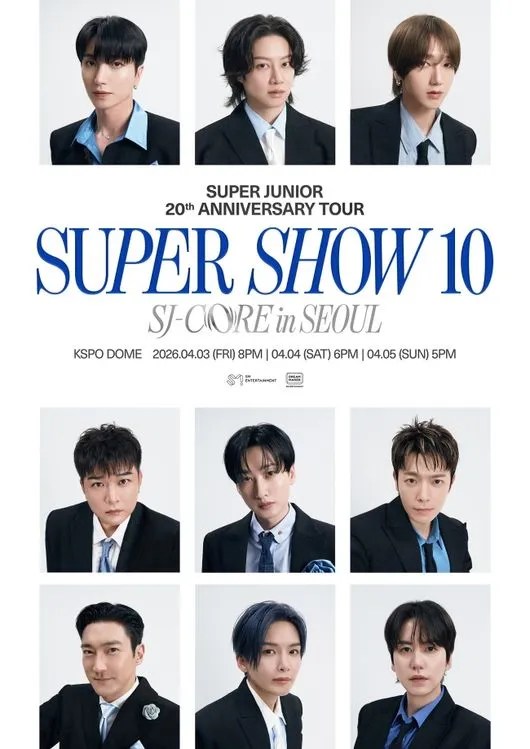
A Bittersweet Milestone
The SUPER SHOW 10 tour was designed to be a “love letter” to fans who have stayed with Super Junior since 2005. While the concert was filled with nostalgic hits and high-energy performances, the night ended on a somber note as news of the accident spread through social media.
Fans worldwide have expressed relief that the injuries were not life-threatening but are calling for stricter safety inspections for large-scale K-pop productions, especially those involving complex stage designs and temporary seating structures.
Editor’s Insight
This incident at KSPO DOME highlights a growing tension in 2026 K-pop: the push for Extreme Fan Proximity vs. Structural Safety. As veteran groups like Super Junior celebrate major milestones, agencies often design “Encore Paths” and side railings to bring idols closer to the “nosebleed” sections. However, this mechanical failure suggests that the physical infrastructure is struggling to keep pace with the high-intensity energy of stadium-level fandoms.
From a crisis management perspective, SM Entertainment’s immediate “Admission of Liability” and promise of full medical support is a necessary move to protect their Topical Authority as a premium event producer. In the digital age, a “Safety Fail” can go viral faster than a “Perfect Performance.” By taking swift, public responsibility, the agency is attempting to pivot the narrative from negligence to compassionate recovery.
As Super Junior continues their world tour, the industry will be watching to see if this leads to a mandatory “Safety Standard Refresh” across all major Hallyu world tours.
Do you think major agencies should move away from temporary “proximity” structures to prioritize safety, even if it means less face-to-face time between idols and fans?
- HOT NEWS
- Electrolux Group ceases manufacturing in Chile
- Zoomlion Reports 2025 Results With International Revenue Approaching 60% of Total
- NSSK Closes Series IV Funds at JPY 250 Billion Hardcap, More Than 2x Oversubscribed
- TWSC Showcases at CFMS 2026, Expanding Application Boundaries with Full-Stack AI+ Storage Solutions
- Lee Junho’s Impact Is Already Showing—New Ambassador Photos Signal His Global Power for Busan 2028


허블 정보
Copyright © 2017 Huvle All Rights Reserved
admin@huvle.com