
First Ever APAC Pharmacists' Guideline to Tackle Peripheral Neuropathy
Developed By APAC Pharmacist Experts
- 1 in 2 diabetics, and 1 in 10 adults suffer from Peripheral Neuropathy [1],[2]
- Community pharmacists first and most accessible point of healthcare contact
- New guidelines highlight emerging role of pharmacists in elevating the standard of care
SINGAPORE, April 16, 2026 /PRNewswire/ -- Leading Asia-Pacific pharmacist experts, together with P&G Health, announced the region's first guideline designed for community pharmacists to identify, assess, and manage patients with peripheral neuropathy (PN) in everyday pharmacy practice.

The "Empowering Community Pharmacists - Expert Consensus Guidelines for the Effective Management of Peripheral Neuropathy with Neurotropic B Vitamins' translates evidence into practical, culturally adaptable recommendations to standardize pharmacy-based screening, counselling, and stepwise management—narrowing the persistent gap of underdiagnosis and delayed treatment.
Dr. Yolanda R. Robles (Lead Author, Chairperson), Professor, College of Pharmacy, University of the Philippines; President of Federation of Asian Pharmaceutical Associations (FAPA) said, "PN is a widespread and often debilitating condition that has high prevalence amongst diabetic patients in APAC [3-7] – the Philippines (58%), Indonesia (58%), Malaysia (54%), Thailand (34%), Singapore (28%), and Australia (21%). With pharmacists being the most accessible health professional in many APAC countries, this consensus translates the best available evidence into simple steps for pharmacists to spot PN earlier, guide patients confidently, and partner physicians to improve long-term outcomes."
Why this matters in Asia Pacific
Shraddha Vohra, Vice President, Personal Health Care Asia Pacific, P&G Health Singapore said, "Community pharmacies are often the first point of contact for people experiencing numbness, tingling, burning, or pins-and-needles in their hands and feet—symptoms commonly associated with PN. With up to 80% of PN cases in APAC estimated to remain undiagnosed, pharmacists are uniquely positioned to recognize symptoms early, guide patients to appropriate care, and help prevent progression. This guideline is tailored to the realities of pharmacy workflows, multilingual communities, and varied regulatory environments across APAC, and beyond, with tools that can be adapted locally to support rapid adoption."
Reframing the role of pharmacists: from reactive management to proactive early screening and timely treatment
According to Contributing Author Dr. Apt. Lusy Noviani, Indonesian Pharmacist Association (IAI), "From behind the counter to the frontline, APAC pharmacists are moving from dispensing to early detection and proactive care. In countries like Indonesia, where doctor–to–population ratios are low, community pharmacists play a critical role in early screening and reducing delays in PN care."
The new guidelines enable pharmacists to function as proactive care partners throughout the PN pathway by empowering them to:
- Spot at-risk patients early by applying a newly-created risk mnemonic (MEDIC)
- Differentiate nerve pain from muscle pain
- Use simple, validated screening questionnaires in-pharmacy (e.g., ACT, DN4, NPQ)[8]
- Initiate counselling, consider appropriate over-the-counter options including high-dose nerve nourishing B vitamins (B1, B6, B12) when suitable, and refer promptly when red flags are present
- Monitor and follow up to evaluate response, ensure safety and adjust individualized patient care plans
Spot PN early with MEDIC
"In busy pharmacy settings, simple tools matter. MEDIC is an easy-to-remember risk mnemonic that stands for M – Medication, E – Elderly, D – Diabetes, I – Infection, C – Chronic. Using MEDIC, pharmacists can flag patients at high risk of nerve damage early— without diagnosing, but by guiding next steps," shared Dr. Navin Kumar Loganadan, Contributing Author & Head of Ambulatory Pharmacy & DMTAC (Diabetes Medication Therapy Adherence Clinic) Clinic, Malaysia.
"PN is often discovered late when nerve pain is severe. Our guideline empowers pharmacists to differentiate nerve from muscle pain early, apply validated screening tools, and initiate timely referrals. This shift from reaction to prevention can help patients restore nerve function and independence," added Ms. Grace Chew, Independent Pharmacist & Contributing Author, Singapore.
From screening to support: A clear care pathway
Dr. Kenny James P. Merin, Contributing Author & Lyceum of the Philippines University – Davao (LPU Davao) shared, "This guideline is about practical, everyday pharmacy. The steps are clear: identify risk, screen, counsel, consider therapeutic-dose B1, B6, and B12 where appropriate, and follow up consistently. With structured algorithms and checklists, pharmacists can standardize care without slowing workflow."
It is common for patients to self-medicate for PN with vitamin B products, often using inappropriate dosage. This can lead to a lack of efficacy due to an insufficient dose or, conversely, overdose from certain B vitamins, which can worsen nerve-related symptoms. This is therefore an area where pharmacists can provide critical oversight toward improving patient outcomes.
"Therapeutic-dose neurotropic B vitamins have a role in comprehensive PN management for suitable patients with the right dose and duration. Our guideline emphasizes pharmacist vigilance—reassessing at 3–6 months, watching for red flags, and collaborating closely with physicians," added Dr. Kitiyot Yotsombut, Contributing Author, Department of Pharmacy Practice, Chulalongkorn University, Thailand.
Access and implementation
The expert consensus guideline will be made available for APAC pharmacists via a newly launched resource portal, P&G Nerve Connect and expert-led webinars in the Philippines, Indonesia, Malaysia, Thailand, Singapore.
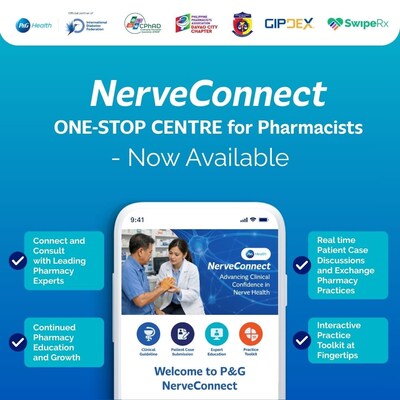
"Behavior change is never easy, our recent pharmacist survey in the Philippines showed that those completing five or more training sessions demonstrate significantly better knowledge on the right dose of B vitamins for PN. P&G Health's Nerve Connect provides an always-on omnichannel education solution, transforming paper-based guidelines into engaging, everyday pharmacist practices," added Dr. Yolanda R. Robles.
Shraddha Vohra from P&G shared, " P&G Nerve Connect is a one-stop center for nerve health bringing together real-world patient case insights and practical tools to help pharmacists enhance patient interactions and strengthen everyday clinical decision-making. Pharmacists who face high patient flow, multiple tasks and limited capacity will have access to resources such as checklists and training videos. In addition, they will be encouraged to submit their patient cases to inspire their community and exchange learnings across APAC."
To access the first APAC Pharmacists' Guidelines for PN, visit https://mobile.swiperxapp.com/png-nerveconnect-ph/clinical-guideline/
To access P&G Nerve Connect, visit https://mobile.swiperxapp.com/png-nerveconnect-ph/
Notes to editors: The guideline is unbranded and intended for healthcare professional use. It complements, not replaces, physician diagnosis and care. Pharmacists should adhere to local regulations governing scope of practice, screening, and referral.
Media contact - MSL
Isha Meleth, MSL Singapore [Isha.meleth@mslgroup.com]
References
1. Malik, R.A. International Review of Neurobiology, Volume 127; 2016, 287-317. |
2. Joel R.S, et. al., Current Medical Research and Opinion, 40(6), 977–987. https://doi.org/10.1080/03007995.2024.2352852 |
3. Diabetes: Australian Facts, Diabetes-Related Complications Available online (accessed on 19 September 2025). |
4. Malik, R.A et. al.; J Diabetes Investig 2020, 11, 1097–1103, doi:10.1111/jdi.13269. |
5. Malik, R.A. et al. Adv Ther 2017, 34, 1426–1437, doi:10.1007/s12325-017-0536-5. |
6. Espiritu-Picar, R.B. et. al. Acta Med Philipp 2023, 57, 46–51, doi:10.47895/amp.vi0.4471. |
7. Hu Hanquan, A. et. al.; Proceedings of Singapore Healthcare 2021, 30, 265–270, doi:10.1177/2010105820978993. |
8. Gad, H.; et. al. Current Medical Research and Opinion 2025, 41, 93–104, doi:10.1080/03007995.2024.2443109. |

 View original content to download multimedia:https://www.prnewswire.com/apac/news-releases/first-ever-apac-pharmacists-guideline-to-tackle-peripheral-neuropathy-302744074.html
SOURCE P&G Health

- HOT NEWS
- APP Group Supports Japan's Gift-Giving Traditions Through Sustainable Paper
- Relativity and Wickard.ai Partner to Bring Hands-On Legal AI Training to U.S. Law Schools
- PMET Launches Relationship with Koch Technology Solutions to Advance Value-Added Caesium Chemicals from Shaakichiuwaanaan
- Ailux Appoints Maria Belvisi, Ph.D., as Chief Scientific Officer
- French May Arts Festival & French GourMay 2026 Programme Lineup Revealed



허블 정보
Copyright © 2017 Huvle All Rights Reserved
admin@huvle.com