
Why Foreign Fans Are Surprised by Korea’s K-Pop Concert Culture
Many international fans arrive in Korea expecting K-pop fandom to be loud, wild and full of energy. But after attending a concert in Korea, some are surprised to find a fan culture that is far more organized, focused and controlled than they imagined.
For many foreigners, K-pop is already familiar before they ever visit Korea. They know the songs, watch the performances, follow the members and understand how passionate global fandoms can be.
But experiencing K-pop culture inside Korea can still feel completely different. One of the biggest culture shocks often happens at concerts. In Europe or the United States, concerts are usually seen as a place to jump, dance, sing loudly and enjoy the music freely. The audience becomes part of the party. At Korean K-pop concerts, however, the atmosphere can feel more disciplined. Fans may hold light sticks, follow official fan chants, record moments carefully and focus closely on the stage. To some foreign visitors, this can feel surprisingly quiet.
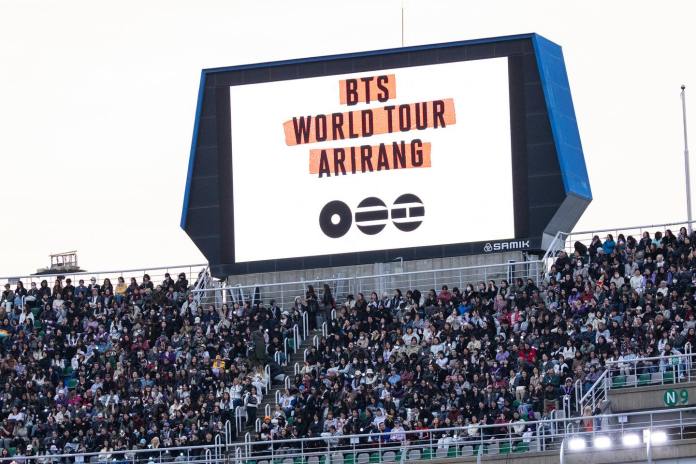
Why Korean K-Pop Concerts Can Feel Different
Foreign fans sometimes say they felt awkward after dancing or singing loudly at a Korean concert because the people around them were not moving in the same way.
Instead of jumping throughout the show, many Korean fans concentrate on the performance, wave their light sticks in sync and respond at specific moments.
This does not mean they are not enjoying the concert.
In Korean fandom culture, watching the stage carefully is also a form of respect. Fans often want to see every detail of the choreography, facial expressions, outfits and live performance. For them, the concert is not only a place to release energy. It is also a space to appreciate the artist’s work closely.
That difference can surprise foreigners who are used to more spontaneous concert behavior.
Fan Chants Are a Major Part of Korean Fandom
One of the most important parts of Korean K-pop concert culture is the fan chant.
Fan chants are organized responses that fans shout at certain points in a song. They may include members’ names, group slogans or repeated phrases that match the rhythm of the track.
To international fans experiencing it for the first time, this can feel very different from simply singing along.
In Korea, fan chants are not random noise. They are prepared, timed and practiced. When thousands of fans do them together, they become part of the performance itself.
This is why Korean fans may seem calm during some parts of a song but suddenly become very loud at exactly the right moment. Their participation is structured rather than chaotic.

Korean Fans Treat Fandom Like Teamwork
Another thing that surprises foreign fans is how organized Korean fandoms can be.
In many Western countries, being a fan often means enjoying the music, going to concerts, buying merchandise or sharing opinions online. In Korea, fandom can feel much more collective.
Fans stream songs, vote in music shows, buy albums, organize birthday events, prepare advertisements, join fan cafes and support artists in coordinated ways.
To foreigners, this can feel almost like a team project.
Korean fans are not only consuming content. They are helping create results. Chart rankings, album sales, voting scores and public visibility often become shared goals within the fandom.
This is why some foreigners describe Korean fandom as extremely loyal and dedicated.
The Relationship Between Idols and Fans Feels Very Close
Foreign fans are also often surprised by how emotionally close the relationship between idols and fans can seem in Korea.
In Europe, people may admire musicians mainly for their songs or performances. Of course, strong fandoms exist there too, but the relationship is often more focused on music.
In K-pop, the connection can feel more personal.
Fans follow an idol’s growth from trainee days to debut, from small stages to major achievements. They watch behind-the-scenes videos, livestreams, variety shows and personal messages. Over time, the artist can begin to feel less like a distant celebrity and more like someone the fans have supported through every step.
This emotional closeness is one reason Korean fandom can feel so intense to outsiders.
Dating News Can Cause Culture Shock
One of the most difficult parts for some foreign fans to understand is the reaction to idol dating news.
In many European countries, a singer or actor dating someone may not feel like a major issue. Some fans simply say that the artist deserves to be happy.
In Korean idol culture, however, dating news can sometimes create stronger reactions.
This is connected to the way idols are marketed and how closely fans may feel attached to them. When fans spend years supporting an artist emotionally and financially, some may feel disappointed or confused when dating rumors appear.
Not all Korean fans react negatively, and attitudes are slowly changing. But for foreign fans, the intensity of the reaction can still feel surprising.
It shows that the meaning of “being a fan” can differ greatly depending on culture.
Western Fandom and Korean Fandom Have Different Styles
The difference is not about one culture being better than the other.
Western fandoms often value freedom, personal expression and individual enjoyment. Fans may dance, sing, create memes, make fan art or support artists in their own way. A person does not have to spend money or join organized projects to be considered a real fan.
Korean fandom culture, by contrast, often places more emphasis on participation and visible support. Streaming, voting, buying albums and attending events can become ways to prove dedication.
This creates a more organized fandom environment.
To foreigners, it can feel intense. To Korean fans, it can feel natural and meaningful.
European K-Pop Fans Are Also Changing
Interestingly, K-pop is also changing fandom culture in Europe.
In the past, many European fans may have treated K-pop like any other music genre. They listened to songs, watched videos and attended concerts when possible.
Now, more fans are adopting Korean-style fandom habits.
They buy official light sticks, learn fan chants, organize birthday events, join streaming projects and vote in online awards. Some even say that after becoming K-pop fans, going to a concert without a light stick feels incomplete.
This shows that Korean fandom culture is not staying only in Korea. As K-pop becomes more global, its fan practices are spreading too.

Different Ways to Love the Same Artist
For foreigners, Korean fandom culture can feel surprising at first.
A concert may seem too quiet. Fan chants may feel too organized. Voting and streaming may feel like serious work. Reactions to dating news may feel difficult to understand.
But these differences come from different ideas of what it means to support an artist.
Some fans show love by dancing and singing loudly. Others show love by watching quietly, learning fan chants and making sure the artist receives strong support on charts and awards.
Some fans focus mostly on the music. Others care deeply about the artist’s journey, growth and personal story.
Both are real forms of fandom.
K-Pop Is Becoming a Meeting Point for Global Fan Cultures
K-pop is now a genre where many different fan cultures meet.
Korean fans bring organization, loyalty and collective support. International fans bring energy, creativity and freer concert habits. Together, they are creating a new global fandom culture that is still changing.
For foreigners living in Korea or attending a K-pop concert for the first time, the experience can feel unexpected.
But after understanding the meaning behind the light sticks, fan chants, quiet focus and organized support, Korean fandom begins to look less strange.
It is not a lack of passion.
It is simply a different way of showing love.
- HOT NEWS
- Lazada Joins Meta's Affiliate Partnerships Programme to Streamline Social Shopping in Southeast Asia
- Checkout.com partners with Agoda to deliver AI-powered payment performance for global travel
- Apkudo unveils RSA: The first zero-touch automation system built for foldables, tablets, and modern device processing
- RapDev Expands Into APAC, Extending Global Datadog Footprint
- Elliott Management Statement on Northern Star Resources Ltd



허블 정보
Copyright © 2017 Huvle All Rights Reserved
admin@huvle.com