
“Your Face Is So Small!”: 5 Korean Compliments That Often Surprise Foreigners
Imagine meeting someone in South Korea for the first time and hearing, “Your face is really small.”
For many international visitors, the immediate reaction may not be happiness but confusion. They may wonder why someone noticed the size of their face or whether the comment was even intended as a compliment.
In Korea, however, it usually is.
Compliments can reveal a surprising amount about a country’s beauty standards, social values, and ways of expressing interest. While people in many cultures commonly use broad phrases such as “You look beautiful,” “I like your style,” or “You look great today,” compliments in Korea can be much more specific, drawing attention to facial proportions, eye shape, skin condition, body changes, or how young someone appears.
Of course, not every Korean gives the same compliments, and reactions differ depending on age, personality, and cultural background. Still, these five expressions are frequently mentioned by foreigners because their intended meaning may not be immediately obvious outside Korea.
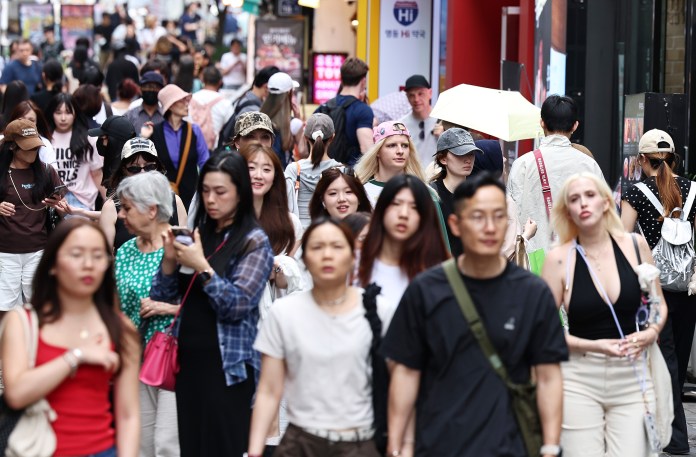
1. “Your Face Is So Small”
Few Korean compliments create as much confusion among foreigners as being told they have a small face.
In Korean beauty culture, a smaller-looking face is often associated with balanced body proportions and delicate facial features. The expression appears frequently in entertainment programs, celebrity interviews, beauty content, and everyday conversations, where people may admire how small someone’s face looks next to another person or even compare it with the size of a hand.
For foreigners who have never considered face size an important beauty characteristic, the compliment can feel unexpectedly specific. Some may initially wonder whether people are implying that their head looks unusually small or whether their face was considered large before.
The meaning is generally much more positive. When someone in Korea says, “Your face is really small,” they are often expressing admiration for the person’s overall proportions rather than making a literal judgment about measurements.
It is one of those compliments that may require cultural context before it actually feels flattering.
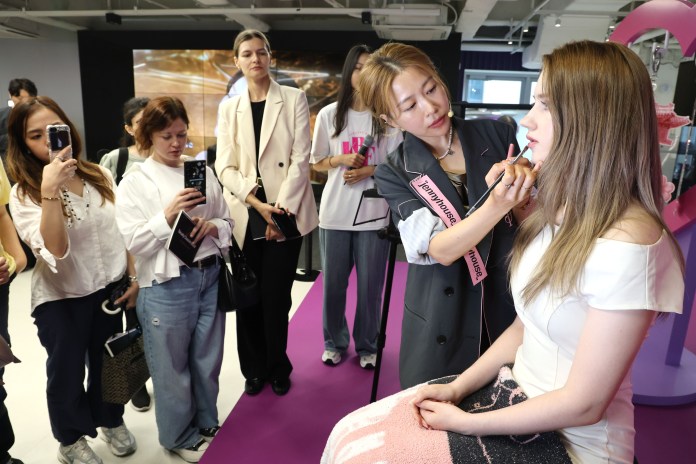
2. “Your Eyes Are Really Big”
Another comment many foreigners hear after arriving in Korea concerns the size or definition of their eyes.
Large, clear-looking eyes have long been emphasized in parts of Korean beauty culture because they are often associated with a bright, expressive appearance. As a result, someone may naturally compliment another person by saying that their eyes are large, striking, or clearly defined.
In some countries, people are more likely to compliment eye color by saying, “You have beautiful blue eyes,” or “I love your eye color.” Directly commenting on the size of someone’s eyes may be less common, which is why some international visitors are surprised to hear it shortly after meeting someone.
Korean compliments can also focus on individual facial details, including eyebrows, eyelashes, the nose, facial shape, or even how clearly facial features stand out. Rather than simply saying that someone is attractive, the speaker may identify the exact feature they find beautiful.
For foreigners, this level of detail can initially feel unusually observant. In Korea, it is often intended as a warm and sincere expression of admiration.
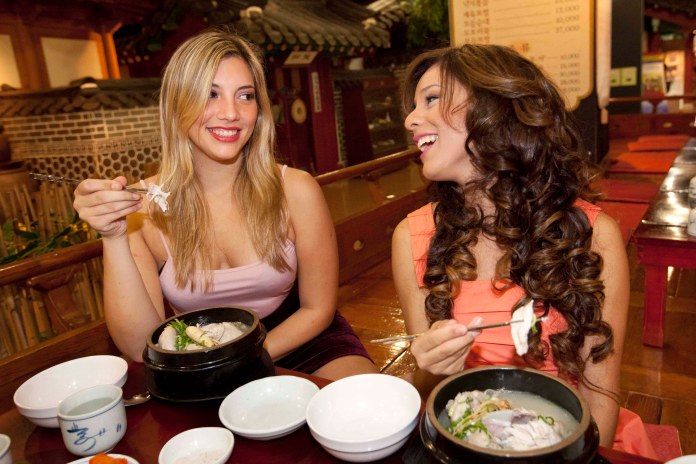
3. “Your Skin Is So Good”
As Korean skincare has gained international popularity, compliments about clear or healthy-looking skin have become easier for many K-beauty fans to understand.
In Korea, saying that someone has good skin is often considered a significant compliment. Smooth texture, an even complexion, and a healthy-looking glow are commonly connected with beauty and careful self-maintenance, which means a comment about someone’s skin may also recognize the effort they put into caring for themselves.
Foreign visitors are sometimes surprised by how quickly people notice details such as skin texture or complexion. Someone may ask which skincare products they use immediately after saying their skin looks clear, turning a compliment into a conversation about beauty routines.
This attention is also reflected in the global influence of K-beauty, where skincare is frequently treated as the foundation of a beauty routine rather than simply preparation for makeup.
For many foreigners, “Your skin is beautiful” eventually becomes one of the easiest Korean compliments to recognize—and one of the most appreciated.
4. “Did You Lose Weight?”
Not every compliment translates comfortably across cultures.
In Korea, telling a friend or coworker that they appear to have lost weight has traditionally been used as a positive observation, particularly when the speaker believes the person has been exercising, dieting, or trying to change their appearance. The comment may be intended as encouragement or as a way of showing that someone noticed a change.
However, conversations about weight are considered highly personal in many countries. Some foreigners may feel uncomfortable when their body is mentioned unexpectedly, especially by a coworker, acquaintance, or someone they have only recently met.
Attitudes in Korea are also changing. As conversations about body diversity and personal boundaries become more common, some people are becoming more cautious about treating weight loss as an automatic compliment because changes in weight can happen for many reasons and may not always be intentional or positive.
This makes the expression an important example of how good intentions do not always create the same reaction across cultures. A comment intended as friendly encouragement in one setting may feel intrusive in another.
5. “You Look So Young for Your Age”
Being told that you look younger than your actual age is another compliment that carries particularly positive meaning in Korea.
The Korean word dongan (동안) literally refers to a youthful-looking face and is commonly used to describe people who appear younger than expected. Celebrities are frequently praised for maintaining a youthful appearance, while skincare, exercise, fashion, and lifestyle content often discusses ways to achieve or preserve a dongan look.
As a result, Korean people may openly express surprise after learning someone’s age and immediately tell them that they look much younger.
Foreign reactions can differ. In cultures where asking about age is considered private, discussing someone’s age during an early conversation may feel unexpected. Some visitors may be more surprised that their age was mentioned at all than pleased by the compliment itself.
Once the meaning becomes clear, however, many understand that being called dongan is generally intended as strong praise.
Why Do Korean Compliments Feel So Specific?
One of the most noticeable differences is that many Korean compliments focus on individual details rather than an overall impression.
Instead of simply saying that someone looks beautiful, a person may compliment clear skin, large eyes, a small face, a new hairstyle, carefully shaped eyebrows, or a change in appearance. The attention can feel unusually detailed to foreigners who are more accustomed to general compliments.
These expressions are also connected to beauty ideals that have developed within Korean society. Facial proportions, youthful appearance, healthy-looking skin, and clearly defined features frequently appear in Korean beauty advertising, entertainment, and popular culture, making them familiar subjects of everyday conversation.
However, Korean compliments are not always intended as evaluations of appearance. In many situations, noticing a small detail is also a way of expressing attention and creating closeness. Complimenting a new haircut or recognizing that someone changed their makeup can communicate, “I noticed something about you,” rather than simply, “I am judging how you look.”
A Compliment Can Change Meaning Across Cultures
The same sentence can create completely different reactions depending on where it is spoken.
“You have such a small face” may sound strange to someone hearing it for the first time but feel highly flattering to someone familiar with Korean beauty standards. “You lost weight” may be intended as encouragement but feel too personal to someone from a culture where body-related comments are usually avoided.
These differences do not mean that one style of compliment is better than another. They show how ideas about beauty, politeness, privacy, and affection are shaped by culture.
For many foreigners living in South Korea, learning Korean compliments becomes a small but memorable part of understanding everyday life. At first, they may wonder why people keep noticing their face size, eyes, skin, or age. Later, they may recognize that these surprisingly detailed comments are often intended as simple expressions of admiration, friendliness, and interest.
- HOT NEWS
- Vantage Introduces 24/7 Gold CFD Trading with XAUUSD247
- Antaisolar Launches Agri-PV Tracking System Solution at Intersolar Europe 2026
- Founder Olive Tai Appointed Chairman of the Board of Synagistics; John Wu Appointed Chief Executive Officer as Company Enters Next Stage of AI and Digital Commerce Growth
- Cambrex, Snapdragon Chemistry, and Q1 Scientific Recognized for Innovation and Sustainability in Pharma
- CovationBio Introduces Two New Bio-Based Innovations at Functional Fabric Fair New York


허블 정보
Copyright © 2017 Huvle All Rights Reserved
admin@huvle.com