
Why Korean Cafés Feel More Like Living Rooms Than Coffee Shops
Walk into a café in South Korea and you might notice something unusual almost immediately. Not the coffee, the desserts, or even the stylish interiors but the fact that many people aren’t actually drinking anything.
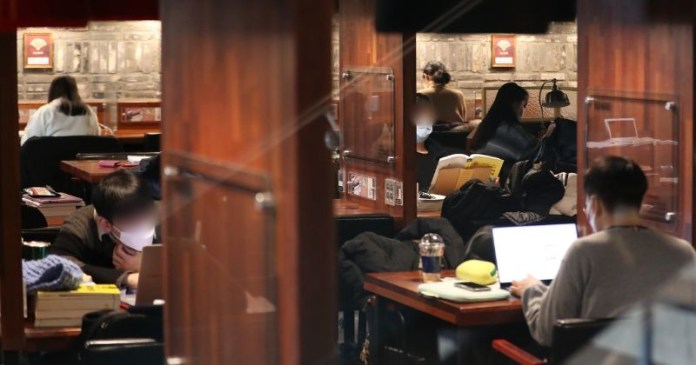
An iced Americano sits half-finished on the table. A laptop is open. Someone is typing an assignment, attending an online meeting, editing a presentation, or quietly reading a novel. Hours can pass, yet very few customers seem to rush out the door.
For visitors from many countries, this is one of the first clues that Korean café culture follows a completely different rhythm.

Coffee is only part of the experience
In many parts of Europe or North America, cafés are primarily places to meet someone, grab a drink, or take a short break before continuing the day.
In South Korea, however, cafés often become destinations in themselves.
People intentionally choose a café because they want somewhere comfortable to spend time. Some stay for twenty minutes, while others remain for half the afternoon. The beverage almost becomes an entrance ticket to the space rather than the main event.
This difference surprises many international visitors, especially those accustomed to cafés with faster customer turnover.
Your “desk” might be inside a café
One reason Korean cafés are so popular is that they provide an environment where people can be productive without feeling confined.
Students revise for exams, freelancers edit videos, office workers finish reports between meetings, and job seekers prepare applications. It’s common to see entire tables transformed into temporary workstations with notebooks, tablets, chargers, headphones, and even portable keyboards.
Because remote work and flexible studying have become increasingly common, cafés naturally fill the role of an informal office.
For many Koreans, changing environments can also help improve concentration, making cafés an attractive alternative to working at home.
Silence is part of the atmosphere
Another detail that often catches foreigners off guard is just how quiet many cafés can be.
Rather than becoming noisy social spaces, numerous Korean cafés maintain a calm atmosphere where customers instinctively lower their voices. Even when every seat is occupied, the overall sound level often remains surprisingly low.
Near universities, this becomes even more noticeable during exam periods. Entire cafés can resemble shared study spaces where dozens of people work independently without disturbing one another.
For visitors expecting lively conversations and constant background chatter, the experience can feel unexpectedly peaceful.
There’s almost always a café after dinner
Another aspect of Korean social life that newcomers quickly notice is that dinner rarely marks the end of an outing.
Instead, groups often head somewhere else afterward usually a café.
Rather than lingering inside a busy restaurant, people continue their conversations over coffee or dessert. Birthdays, work gatherings, dates, and family dinners frequently include this second stop, giving everyone more time together in a relaxed environment.
For foreigners, what initially seems like “another unnecessary coffee” soon reveals itself as an important part of Korean socializing.
More than Wi-Fi and coffee
Many cafés in Korea are designed with long visits in mind.
Comfortable seating, free wireless internet, accessible power outlets, and air conditioning encourage customers to settle in. Some cafés even arrange seating specifically for solo visitors working on laptops, while others offer larger communal tables for study groups.
Instead of focusing only on serving drinks, cafés often provide an environment where people feel comfortable spending several hours.
Why there are cafés on nearly every street
South Korea has one of the highest concentrations of cafés in the world, with international chains, independent coffee shops, dessert cafés, themed cafés, and specialty coffee stores often located within walking distance of each other.
Their popularity reflects something larger than a love of caffeine.
These spaces accommodate a wide range of daily activities—working remotely, studying, meeting friends, waiting between appointments, or simply enjoying time alone outside the home. In densely populated cities where apartments are relatively compact, cafés also provide an additional place to relax without feeling isolated.
Understanding Korean café culture
Many foreigners initially wonder how people can spend three or four hours in a café after ordering just one drink.
The answer lies in the role cafés play within everyday Korean life.
They’re not simply businesses selling coffee. They function as flexible public spaces where productivity, relaxation, and social interaction naturally coexist.
Once visitors experience this for themselves, many discover that they begin doing exactly the same thing bringing a laptop, ordering an iced Americano, and spending an afternoon in a Korean café without ever wondering whether it’s time to leave.
- HOT NEWS
- Two Million Downloads, One Commitment: Moomoo Malaysia Partners Squash Legend Datuk Nicol David to Invest in Malaysia's Youth
- "The Future of AI is Soul" -- Galaxy Corporation CEO Yong-ho Choi Graces the Finale of UN 'AI for Good' Summit
- NYSE Content Update: Whop Unveils CLI Product to Boost Business Owners
- Exploring Korea’s Fascinating Dream Interpretation Culture
- Plug and Play Announces a Strategic Partnership with Thales to Support Global Expansion of Deep-Tech Startups through Trust My Tech Program



허블 정보
Copyright © 2017 Huvle All Rights Reserved
admin@huvle.com