
Top 3 Majors in South Korea for Promising Careers
Choosing a major is important, but it is not everything
Every year, thousands of international students choose South Korea for its world-class universities, affordable tuition compared to many Western countries, generous scholarships such as the Global Korea Scholarship (GKS), and growing reputation as an innovation hub.
One of the biggest questions many prospective students ask is: Which major offers the best job opportunities after graduation?
There is no universal answer. A degree alone will never guarantee employment, and many graduates build successful careers in fields that have little to do with their university major. Passion, language ability, internships, networking, and practical skills often matter just as much as what is written on a diploma.
That said, some industries in South Korea are currently experiencing stronger demand than others because of rapid technological development, government investment, and labor shortages. Based on current employment trends, these three fields stand out as some of the strongest options for students who hope to work in Korea after graduation.

1. Computer Science, Artificial Intelligence, and Software Engineering
If there is one field that continues to grow almost everywhere in the world, it is technology.
South Korea is home to global companies such as Samsung Electronics, Naver, Kakao, LG, and numerous fast-growing AI startups. As artificial intelligence, cloud computing, cybersecurity, robotics, and software development continue expanding, demand for highly skilled engineers remains strong.
Students studying computer science can pursue careers in:
- Software development
- Artificial intelligence
- Data science
- Cybersecurity
- Mobile application development
- Cloud engineering
- Robotics
Unlike many careers that depend heavily on local regulations, programming and software skills are highly transferable internationally, making this major attractive even if graduates eventually decide to work outside Korea.

2. Semiconductor and Electrical Engineering
Few industries are more important to South Korea’s economy than semiconductors.
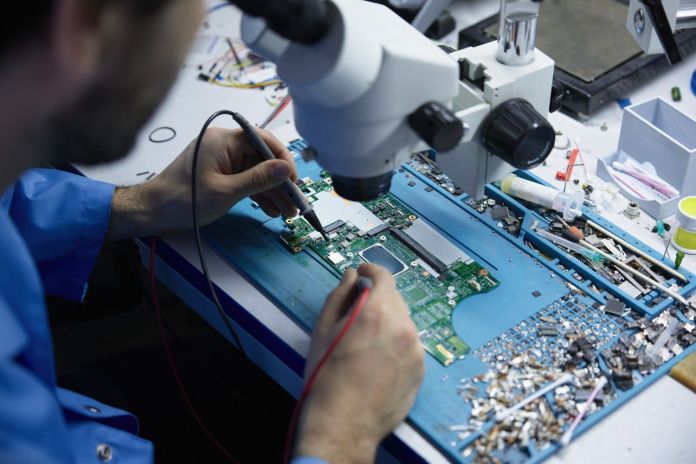
The country is one of the world’s largest semiconductor producers, led by companies such as Samsung Electronics and SK hynix. Government investment and the global AI boom have accelerated demand for engineers specializing in chip design, semiconductor manufacturing, materials, and electronic systems. Recent reports show that employment-linked semiconductor programs have become some of the most competitive university majors in Korea.
Students in this field often study:
- Semiconductor engineering
- Electrical engineering
- Electronic engineering
- Materials engineering
- Microelectronics
Many universities have also established industry partnerships that provide internships, research opportunities, and in some cases direct recruitment pathways.
3. Biotechnology, Biomedical Engineering, and Healthcare Technology
Healthcare is changing rapidly, and South Korea is investing heavily in biotechnology, pharmaceuticals, medical devices, and digital healthcare.
While becoming a doctor or pharmacist in Korea may require additional licensing that can be difficult for international graduates, related fields such as biotechnology, biomedical engineering, bioinformatics, and medical technology continue to expand.
Graduates may work in:
- Pharmaceutical companies
- Medical device manufacturers
- Biotechnology research
- Laboratory science
- Healthcare technology
- Biomedical AI
As Korea’s population ages and medical innovation accelerates, experts expect continued growth across many healthcare-related industries.

But what about Business, Media, Design, or the Humanities?
These majors are absolutely valuable.
Business, international relations, communications, journalism, design, marketing, psychology, and many other disciplines continue producing successful graduates every year.
However, employment often depends more heavily on personal experience than on the degree itself. Students who build strong portfolios, complete internships, develop Korean language skills, and gain practical experience frequently outperform graduates who rely only on their academic credentials.
For example:
- A marketing student with internship experience and fluent Korean may receive more job offers than a computer science graduate with no practical experience.
- A journalism student with an impressive portfolio and multilingual abilities can become highly competitive in international media.
- A designer with exceptional creative work may have opportunities around the world regardless of where they studied.
In other words, your skills matter at least as much as your major.
Korean language can make a bigger difference than your degree
For international students hoping to stay in Korea after graduation, Korean language ability is one of the biggest advantages.
Many companies require Korean because daily communication with colleagues, clients, and government agencies takes place in Korean. Even in technical fields where English is widely used, stronger Korean skills can significantly improve employment opportunities.
This is why many successful international graduates focus not only on earning good grades but also on achieving high TOPIK scores, participating in internships, joining university clubs, and building professional networks while studying.
Choose a major you can see yourself studying for four years
It is tempting to choose a major solely because it appears to have excellent employment prospects.
However, university is a long journey. If you dislike the subject, staying motivated through difficult coursework can become much harder.
The best major is often the one that sits at the intersection of three things:
- You genuinely enjoy learning it.
- You are willing to work hard and continuously improve.
- It offers career opportunities that match your long-term goals.
A motivated student who loves their field will usually outperform someone who selected a major only because it was considered “safe.”
The bottom line
South Korea’s job market is evolving quickly, particularly in technology, semiconductors, and biotechnology, making these three areas some of the strongest choices for students focused on long-term career opportunities.
At the same time, no major guarantees success, and no degree should be considered “bad.” Whether you study engineering, business, journalism, design, music, or literature, dedication, practical experience, and a willingness to keep learning will ultimately play a much greater role in shaping your future than your major alone.
- HOT NEWS
- DT Infrastructure (DTI) awards TCL Solar landmark 720MW Smoky Creek and Guthrie's Gap Projects, accelerating the future of Back Contact solar technology
- Seoinyoung Confesses to Full-Body Anesthesia Arm Liposuction: "Used Entire Appearance Fee for the Procedure"
- Alpha Ladder Hosts Globalization Forum, Debuts Proprietary AI Platform AgentX
- Sea, 'bare face revealed'... directly shared the secret to clear skin and youthful beauty
- Patriot Memory Announces Viper Steel 5 Infinite DDR5 Memory with Patent-Pending Infinite Mirror Optical Design and Speeds up to 8000MT/s


허블 정보
Copyright © 2017 Huvle All Rights Reserved
admin@huvle.com