
Jung Hae-in Shines in Netflix’s Our Sticky Love: A Unique Role
Jung Hae-in’s New Netflix Role Brings His Romance and Action Strengths Together
For years, Jung Hae-in’s career has appeared to follow two distinct paths. Romantic dramas such as Something in the Rain, One Spring Night and Love Next Door established him as a master of quiet affection, while D.P. and I, the Executioner revealed a far tougher actor capable of carrying physical action, anger and moral conflict.
Netflix’s Our Sticky Love brings those sides together in one character.
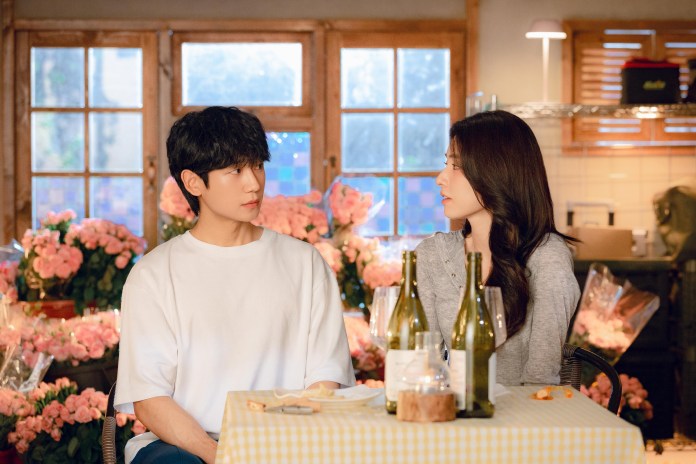
Released globally on August 7, the 12-episode romantic comedy stars Jung as Jang Tae-ha, a former youth boxing champion with a complicated connection to the criminal underworld. He now works as a small-town boxing coach, but his attempt to leave his former life behind is disrupted when he encounters Go Eun-sae, played by Ha Young.
Eun-sae is a prosecutor who wakes up without her memories after becoming entangled in a dangerous investigation. Tae-ha recognizes her as his long-lost first love and claims that he is her boyfriend, beginning an unusual cohabitation arrangement built on a lie intended to keep her alive.
The premise allows Jung to shift repeatedly between romantic lead, awkward fake boyfriend, trained fighter and man confronting a violent past. Those changes make Tae-ha more than another variation on the gentle roles that first made the actor internationally popular.
His Romantic Strength Has Always Been Restraint
Jung Hae-in’s appeal in romance has rarely depended on grand declarations. His performances are usually most effective in the moments before a character says what he feels.
In Something in the Rain, he made Seo Joon-hee’s affection convincing through an ease that gradually became emotional urgency. One Spring Night required even greater restraint, with Jung portraying a single father whose love developed alongside questions about family, social expectations and personal responsibility. Love Next Door later gave him more room for familiar bickering and romantic comedy.
Tae-ha uses many of those established strengths. He is deeply devoted to Eun-sae, but he cannot reveal the full truth behind their relationship. His affection therefore appears through watchfulness, hesitation and the instinct to place himself between her and danger.
Jung fills the space left between the character’s words and his actual intentions. A friendly expression can disguise fear, while a pause in conversation suggests how carefully Tae-ha is managing the story he has created. The romance works because his performance allows viewers to recognize sincere affection inside a fundamentally dishonest situation.
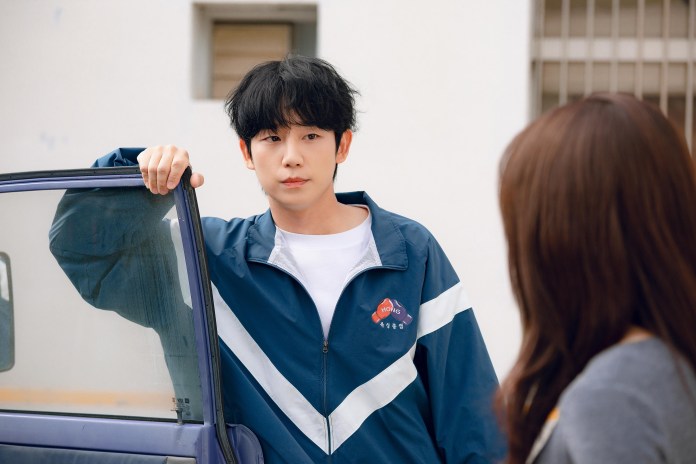
Comedy Comes From Tae-ha Being Bad at His Own Lie
The series also gives Jung a lighter challenge. Tae-ha claims to be Eun-sae’s boyfriend, but he has little romantic experience and is not particularly skilled at making the story believable.
Eun-sae immediately questions whether the casually dressed boxing coach could possibly match her tastes. Tae-ha must respond by improvising a shared history while trying not to reveal that he knows far more about her past than he admits.
The humor comes from the contrast between his physical confidence and emotional awkwardness. Tae-ha can confront dangerous men, yet ordinary intimacy leaves him uncertain. Jung avoids exaggerating that difference into a completely separate comic personality. His embarrassment and poorly concealed admiration remain consistent with the guarded man seen in the drama’s darker scenes.
Director Kim Jang-han described Jung as the right actor for a role requiring strength, romance and an endearingly awkward quality. That combination is important because the series changes tone frequently. Tae-ha must remain recognizable whether he is arguing with Eun-sae in the village or facing former crime boss Baek Sang-gil, played by Heo Sung-tae.
The Action Carries Emotional Meaning
Jung’s action work in Our Sticky Love is not an unexpected addition to his career. It builds on experience developed through D.P., in which physical violence was closely connected to military abuse and institutional power, and I, the Executioner, where he played a more unsettling and unpredictable figure.
Tae-ha is different from both characters. His boxing background explains his fighting ability, but his action scenes are primarily motivated by protection. He is not fighting simply to display skill. Each confrontation reflects his desperation to prevent Eun-sae from being harmed again.
That emotional foundation helps the action belong inside the romance rather than feeling attached from a separate thriller. When Tae-ha faces Baek Sang-gil, the drama moves closer to noir, and Jung adjusts accordingly. His relaxed manner disappears, replaced by a more guarded posture and sharper gaze that acknowledge the character’s history with violence.
The transformation is effective because the series has already shown Tae-ha’s warmth. His anger carries greater weight when viewers understand what he fears losing.
A Career Built on More Than the Romantic Hero Label
Jung Hae-in remains closely associated with romance, but his recent filmography shows a deliberate effort to complicate that image.
D.P. presented him as a soldier navigating guilt and systemic cruelty. The Netflix series required emotional vulnerability, physical endurance and ensemble work rather than conventional leading-man charm. In I, the Executioner, he moved even further from his familiar image by taking on a character whose polished exterior concealed a disturbing ambiguity.
Our Sticky Love does not reject his romantic identity. Instead, it treats that identity as one component of a broader performance. Tae-ha needs the tenderness of his earlier melodramas, the physical credibility of his action projects and the lighter timing he explored in Love Next Door.
This is why the role feels like an important consolidation point in his career. Jung is no longer switching between a “romance version” and an “action version” of himself from one project to another. He is using both within the same story.
The Drama Should Be Judged Separately From an Unrelated Controversy
Some Korean coverage has connected the series to controversy surrounding historical allegations involving Ha Young’s great-grandfather. That issue concerns her family history and her agency’s response. It does not provide a meaningful basis for evaluating Jung Hae-in’s performance.
Attaching the controversy to praise for Jung may produce a provocative headline, but it risks confusing two unrelated stories. His work in Our Sticky Love is better assessed through the performance itself: the controlled romance, awkward humor, physical action and darker emotional shifts he brings to Jang Tae-ha.
Those elements offer a stronger reason to watch than controversy surrounding another cast member. Our Sticky Love demonstrates that Jung Hae-in’s greatest strength is no longer simply making viewers believe that he is in love. It is making tenderness, danger and inner conflict feel like believable parts of the same man.
- HOT NEWS
- 한국 와서 처음 알았다…외국인들이 테무에서 쓸어 담은 주방템 3가지
- 'Chilling Romance' Park Eun-bin and Yang Se-jong, Fake Engagement Date... Tension Even in Couple Photos
- i2Cool Launches i2Coating CorroCool, Combining Electricity-Free Cooling with Industrial-Grade Corrosion Protection
- Taeyong previews the 2026 SBS Gayo Daejeon SUMMER stage... "Passion while communicating with fans"
- Kwon Sang-woo reveals a toned body in his 50s... practicing soccer in New York with his son Lukhee


허블 정보
Copyright © 2017 Huvle All Rights Reserved
admin@huvle.com