
Park Jin Young clarifies suspicions of heresy and cult regarding 'First Fruits'... emphasizes "clear church origin and genealogy"
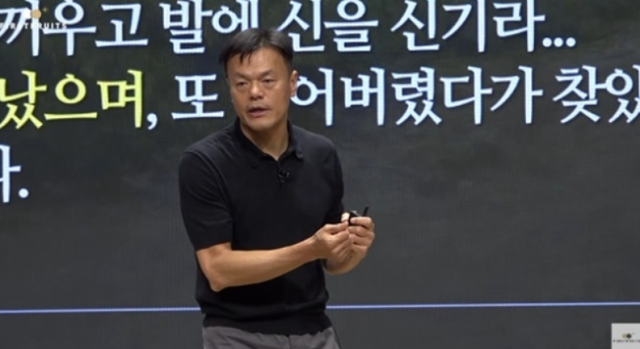 Park Jin Young, the chief producer of JYP Entertainment, directly addressed the controversies surrounding the religious group he leads, ″First Fruits,″ regarding accusations of heresy and sectarianism. On the 19th, in a 1 hour and 12 minute lecture video released on the YouTube channel ″First Fruits,″ Park Jin Young stated that questions about the group’s identity and denomination were the most frequent, asserting, ″First Fruits is not a group without roots but a church with a definite origin and genealogy.″ He acknowledged that members come from various denominations but denied that the past affiliations of members determine the church’s denomination, rejecting suspicions of connections with specific groups such as Shincheonji. He also emphasized, ″Just because there are former Shincheonji members does not mean our church is Shincheonji.″ Park Jin Young presented ″eternal life″ as the core criterion for dividing denominations. He explained that the two main axes for judging a denomination are the method of obtaining eternal life and whether it is possible to lose it after obtaining it, stating that eternal life is gained only through complete faith given to those who have undergone true repentance. As theological background, he referenced Wesleyan Methodism and the works of Pastor Peter Ruckman of the American Independent Baptist Church. In the latter part of the lecture, he mentioned their unique doctrinal system and directly proposed the name ″Gospel Group for the Uncircumcised.″ When allegations of connections to the Salvation Sect arose in 2018, Park Jin Young refuted them, saying it was merely a Bible study held at a rented place at his own expense. In a 2020 broadcast, he also stated that the Bible study group started with friends after visiting Jerusalem grew into its current form and was not related to any organization or church. However, in this recent lecture, he officially referred to the group as a ″church″ and mentioned the denomination name, showing a changed stance from before.
- HOT NEWS
- Horizon Education Proves That Dreams Know No Starting Point
- Global Times: SCO model a prototype for modern global governance, embodying concept of 'community with a shared future for humanity'
- Xinhua Silk Road: China opens major river-to-sea canal, creating trade shortcut to Southeast Asia
- Yang Sang-guk: "Thanks to Yoo Jae-suk, I overcame a 10-year hiatus... I take pride in being KBS's son"
- Changsha brings millennia-old heritage into modern life

![[2026 TMA] All Def Animation 'Nice to Meet You'](https://img.tf.co.kr/article/home/2026/09/19/202647181789811432.jpg)

허블 정보
Copyright © 2017 Huvle All Rights Reserved
admin@huvle.com