
NCT 127 'Bling Bling' MV 22.93 million views... Stop-motion technique 'captures attention'
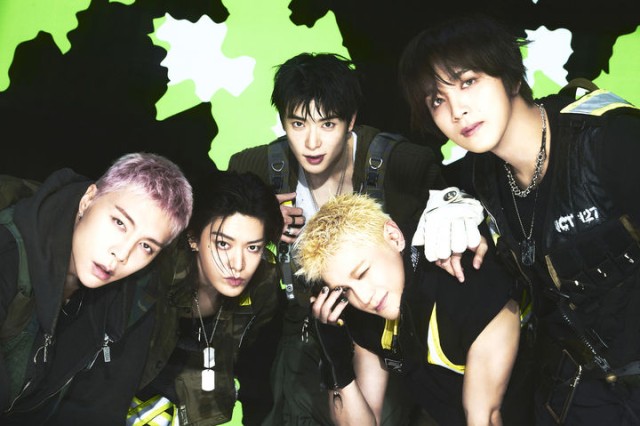 Recently, in music video production, the technique of deliberately interrupting or repeating movements has been used as a kitschy directing style. This method adds humor to the seriousness of characters or gives rhythm to ordinary scenes. The music video for the title track ″Blingy″ from NCT 127’s 7th full-length album, released on the 24th of last month, recorded approximately 22.93 million views on YouTube as of the 27th. The video depicts the members appearing as troubleshooters, roaming various locations in Seoul to find the lost ″Blingy.″ The production team introduced a stop-motion technique by shooting search scenes one shot at a time and quickly stitching them together, creating a cheerful atmosphere. An SM Entertainment representative stated, ″By quickly connecting shots taken one by one, we created an effect of rapid movement as if teleporting, and since the impact of each sequence is important, we aimed to express unique movements that catch the eye even in a short time.″ Stop-motion is a method of creating movement by photographing a subject frame by frame while slightly changing its position or posture. When this technique is applied to people, recording changes in posture and position is called ″pixilation.″ In the ″Blingy″ music video, the members dressed in suits move through various locations on their search, but their steps are interrupted like a series of photos stitched together. Compared to the noir film-style costumes and settings, the movements jump from one pose to the next, creating a playful feeling. Similarly, the music video for ″Candy Pink Magic Hole Flip Phone (What Should I Do)″ released by KiiiKii (KiiiKiii) on July 30 features a collage style combining stop-motion with photos, text, and decorations. The members appear in photos enhanced with filters and embellishments, and as the photos change continuously, it gives the impression of a decorated photo album moving to the music. The ″Magic Hole″ is a flip phone released by Samsung Electronics in 2009, and the video captures the sensibility of the era when people decorated their phones and left images of themselves. Decorations and text are added over photos of members wearing colorful wigs and tights, and scenes of taking pictures with feature phones are included. This direction evokes the late 2000s to early 2010s sensibility of adding effects to photos and uploading them to Cyworld photo albums. Each photo change emphasizes poses and decorations, and the breaks between photos feel like they were pasted one by one. KiiiKii went beyond retro costumes and device recreations to translate the very way of taking, decorating, and sharing photos into the video format. The stop-motion interruptions effectively highlight the photo medium, and combined with the song’s fast beat and electronic sounds, the nostalgic photo album blends with the current music. An industry insider analyzed, ″As trends repeat, the Y2K flow that appeared in costumes, concepts, and hairstyles over the past few years is now influencing music video editing techniques.″ While the method of stitching photos together evokes a nostalgic sensibility, editing that repeats short movements adds new rhythm to everyday life. The music video for ″HEADLOCK″ by Luci Gang, released on July 31, demonstrates this effect on a basketball court and the street. Alongside Luci Gang rapping in front of the camera, the movements of himself and surrounding people are arranged to match the beat of the song. Early on, Luci Gang nods his head while a basketball throw is repeated in the background. This repetition is explained by loop editing, which repeats short video segments. Ordinary actions that might be overlooked at first catch attention through repetition, and movements timed to the beat feel like part of the music. Even as the background changes from the basketball court to the street, Luci Gang remains the focal point, and the contrast between smooth rapping and repeated gestures enhances the song’s liveliness. The addition of repeated movements to everyday spaces transforms the street scenery into a stage that expresses the song’s attitude. In this way, directing that deliberately interrupts or repeats movement adds new expressions to characters and scenes and serves as a device to reveal the personality of the music.
- HOT NEWS
- Go Younjung, natural transformation from thick eyebrows... beauty further emphasized
- Cypherpunk Technologies Appoints Amanda Fabiano to Board of Directors
- OPTIFICIENT™ software solution by Industrial Analytics helps reduce energy consumption and operating costs of heating, ventilation and air conditioning systems
- Ultima Markets Celebrates 10 Years of Growth, Connections and Shared Success Across Asia-Pacific
- Ampace to Spotlight Modular AI Data Center Power at Data Center World Asia (DCWA)


허블 정보
Copyright © 2017 Huvle All Rights Reserved
admin@huvle.com