
Kim Young-kwang Says ‘Take Charge of My Heart’ Brought Back His Smile
The actor discusses returning to romantic comedy, embracing familiar tropes and adjusting his appearance while filming the Netflix series.
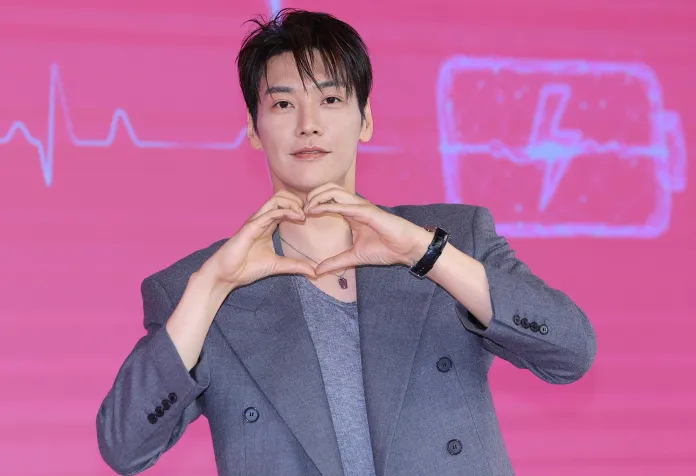
Kim Young-kwang wanted some brightness back in his work. After a succession of darker characters, Netflix’s Take Charge of My Heart offered him a chance to rediscover the energy of romantic comedy.
Speaking during an October 15 interview in Seoul, reported by News1, the actor said the experience affected him beyond the scenes he filmed. He felt himself becoming more cheerful and described his expression as changing into one with smiling eyes.
Remembering the production, he said, still leaves him feeling warm.
Why He Wanted to Return to Romantic Comedy
Kim admitted that the timing influenced his decision to accept the role.
He wondered whether romantic-comedy scripts would continue coming his way as he grew older, explaining that the genre depends partly on a lively, buoyant quality he did not want to lose.
He initially questioned whether the script resembled romantic comedies he had already made. After discussing those concerns with the production team, he decided to trust their judgment and take part.
The opportunity also arrived when he was ready for a change. Playing villains had allowed him to challenge himself, but he felt that continuing in darker roles had made him quieter and more subdued.
A romantic comedy offered a welcome shift in mood.
A More Mature Approach to Familiar Tropes
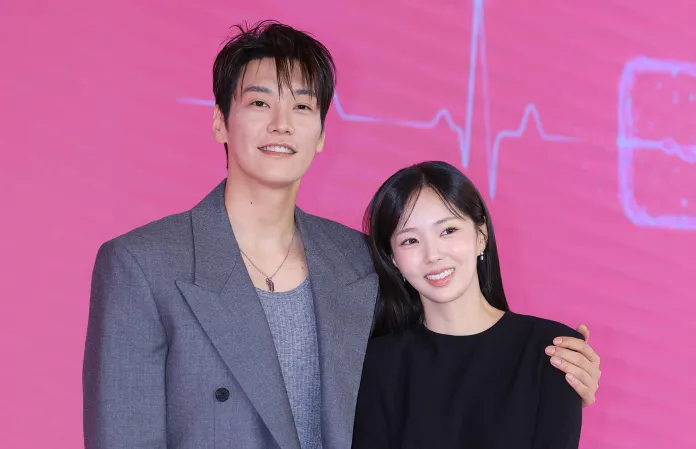
Take Charge of My Heart follows Baek Ho-rang, a wealthy resort executive whose artificial heart needs recharging, and Na Bo-bae, a woman whose body produces electricity.
Its fantastical setup leaves plenty of room for familiar romantic-comedy situations. Kim said director Park Soo-won made clear from the beginning that the series would embrace those conventions.
Rather than trying to avoid them, he focused on how Ho-rang could feel different from his earlier characters.
Kim described some of his previous romantic roles as more childish or dependent. This time, he aimed for a more mature performance, trusting the director’s approach to the material.
Adjusting His Appearance During Filming
Kim also spoke candidly about paying attention to his appearance throughout production.
He said he began dieting partway through the shoot and lost and regained approximately three to four kilograms. At 190 centimeters tall, he identified 72 kilograms as the weight at which he personally felt he looked his best on camera.
The comments described his own approach to preparing for the role.
His preparation accompanied the challenge of playing a polished third-generation heir whose carefully controlled image conceals a vulnerable secret.
The Scene That Made Him Laugh
Even while committing to the romance, Kim sometimes found the material amusing to perform.
He recalled appearing as a bodyguard in one of Bo-bae’s imagined scenarios. Although he stayed immersed while the camera was rolling, his everyday personality would return as soon as the director called cut, prompting him to joke around.
That balance between commitment and humor appears to have been part of the production’s appeal for him.
Looking back at his career, Kim said he sometimes wished he had made more romantic comedies. The experience reminded him how much he enjoys the genre.
A Strong Opening on Netflix
Released on October 9, Take Charge of My Heart recorded three million views during its first three days of availability and ranked No. 3 on Netflix’s weekly non-English TV list, according to Korean coverage of the October 5–11 chart.
Netflix’s views metric divides total viewing hours by a title’s runtime. The figure therefore represents the platform’s calculated views, rather than a count of individual viewers.
Editor’s Note: The Deal Behind the Romance
Netflix’s official English title is Take Charge of My Heart. The series is adapted from Haebeon’s Naver web novel Charge Me Up and stars Kim Young-kwang opposite Chae Soo-bin.
The platform’s synopsis gives both characters a reason to enter their unusual arrangement. Ho-rang needs Bo-bae’s electricity to keep his artificial heart functioning until another operation. Bo-bae, a screenwriter struggling to finish a romance, has been unable to date because touching people can shock them.
Their agreement exchanges physical recharging for help completing her romance bucket list.
That mutual need gives the familiar contract-romance setup its central twist, while providing a lighter setting for Kim’s return to the genre.
- HOT NEWS
- CHINT Showcases Prefab Power Pods at DCWA 2026 to Accelerate AI Data Centre Deployment
- Fans Flock to McDonald’s for G-Dragon’s Exclusive Hat Launch
- Winners of DFA Design for Asia Awards 2026 Unveiled: Asia-focused Designs Shine Globally with Groundbreaking Creativity and Social Value
- One Day After Debut, Lee Soo-man’s Girl Group A2O LITE Hit No. 1 Then a 13-Year-Old Member’s Family Scandal Threatened to Overshadow It All
- The World Egg and Sperm Bank (TWESB) Joins IVI Institute to Expand Access to Reproductive Solutions


허블 정보
Copyright © 2017 Huvle All Rights Reserved
admin@huvle.com