
True Debt, Real Horror Lee Jae-wook’s “Dead-End Job” Cracks Netflix’s Global Top 10 in Just 3 Days
A man takes a job paying 50 times minimum wage. Within episodes, he’s wondering if he’ll survive to spend it. That’s the premise driving Lee Jae-wook’s latest Netflix thriller onto screens in 51 countries and reminding global audiences that one of K-drama’s most versatile young leads just keeps leveling up.
A Breakout That Didn’t Need English Subtitles to Travel
Dead-End Job (꿀알바, also translated as “Honey Part-Time Job”), Lee Jae-wook’s new Netflix series, landed at No. 4 on the platform’s Global Top 10 Non-English TV list just three days after its October 30 premiere. The numbers tell a story of genuinely global reach, not a regional blip: the series topped South Korea’s Top 10 chart on release and simultaneously broke into the Top 10 in Brazil, France, Germany, Hong Kong, India, Mexico, and Thailand 51 countries in total. For a mystery-horror series rooted in distinctly Korean anxieties around debt and gig work, that kind of cross-cultural pickup is a real signal, not just algorithmic noise.
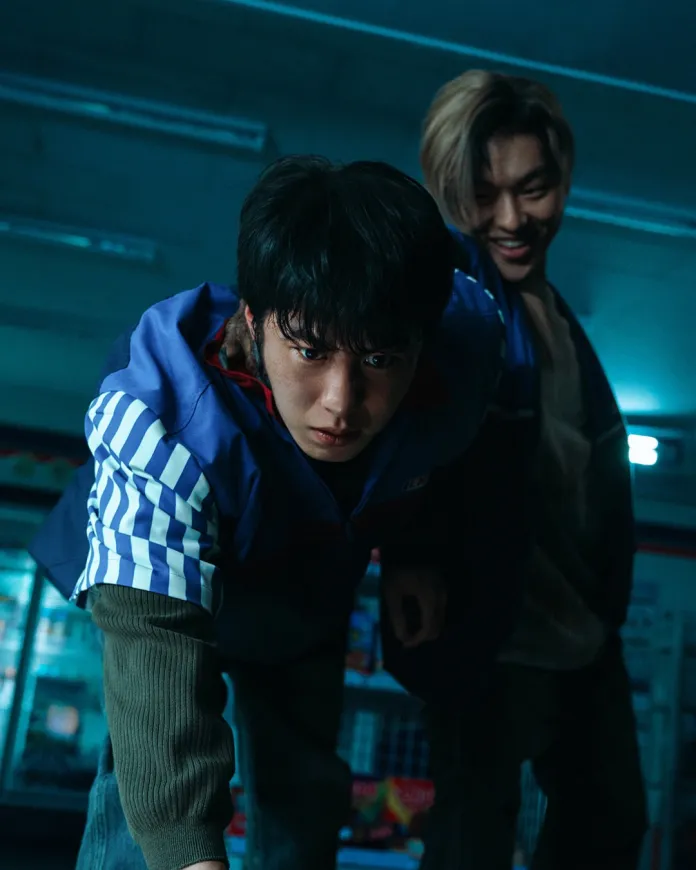
The premise is simple on its surface and brutal underneath. Lee plays Byeon Hyuk-jun, a man drowning in debt who stumbles onto a mysterious staffing agency the ominously named Spyder Human Resource Center offering part-time gigs that pay nearly 50 times the standard hourly wage. What looks like a financial lifeline quickly reveals itself as something closer to a trapdoor: each new assignment drops Hyuk-jun into a different hellish workplace, and the deeper he goes, the more he uncovers traces of his own missing father tangled up in the agency’s secrets.
“Survival Horror,” Korean Style
What makes Dead-End Job worth paying attention to beyond its cast is the genre lane it’s carving out. Korean entertainment outlets have taken to calling it “생계형 호러 액션” roughly, “horror action for the sake of making a living” a label that captures something genuinely fresh: this isn’t supernatural horror for horror’s sake, it’s economic anxiety wearing a monster costume. Each of the show’s eight episodes (titled things like “Convenience Store Rules,” “Midnight Fantasy Cinema,” and “Neo World After Dark”) drops Hyuk-jun into a new themed nightmare workplace, turning the series into something like an anthology of Korea’s precarious labor market filtered through fantasy-horror set pieces.
It’s a smart evolution of a trend Korean content has leaned into for years Squid Game being the most obvious global touchstone where financial desperation becomes the engine for high-concept thrills. Dead-End Job distinguishes itself by keeping the stakes personal and serialized rather than competitive and sprawling, built around one man’s unraveling rather than an ensemble cast thrown into a single arena.
Lee Jae-wook’s Range Is the Real Story
Critics and fans have zeroed in on exactly what makes the performance work: Lee’s ability to track Hyuk-jun’s psychological erosion in real time. The character starts as an ordinary, debt-burdened young man — the kind of relatable economic everyman Korean dramas do especially well — and gradually fractures under escalating terror, fear, confusion, and a stubborn will to survive, all while the show demands he physically handle tense horror-action sequences without losing that emotional throughline. That combination — grounded dramatic nuance plus the physicality of genre thrills is a harder needle to thread than it sounds, and it’s a big part of why reviewers are calling this some of his most mature work yet.
That range shouldn’t surprise longtime followers of his career. Lee Jae-wook has spent nearly a decade quietly building one of the more interesting filmographies among Korean actors his age, refusing to settle into one lane. He debuted on television in Memories of the Alhambra (2018–2019) and made his film debut in The Battle of Jangsari (2019), but it was Extraordinary You (2019) and Do Do Sol Sol La La Sol (2020) that first earned him real recognition and acting honors. The role that made him a star, though, was Jang Uk in the sprawling fantasy epic Alchemy of Souls (2022–2023), a performance that won him three separate acting awards and established him as a leading man capable of carrying a tentpole production. He followed that with the glossy chaebol power-struggle drama The Impossible Heir (2024), trading fantasy swordplay for corporate knife-fighting, and now pivots again into horror-thriller territory with Dead-End Job — a progression that reads less like typecasting avoidance and more like deliberate range-building.

Why This Matters for Lee’s Global Trajectory
Dead-End Job arrives at an interesting moment for Lee internationally. Netflix’s non-English Top 10 chart has become one of the clearest public barometers of which Korean stars are actually breaking through to international audiences versus simply remaining domestic favorites, and a 51-country footprint in three days puts Lee in rare company. The show’s premiere also got an early push from the festival circuit: four of its eight episodes screened at the 31st Busan International Film Festival in the prestigious “On Screen” section before the global Netflix drop, a signal that this wasn’t being treated as disposable streaming content but as a prestige genre play.
Paired with his co-stars Go Min-si, Kim Min-ha, and Lee Hee-joon all strong genre performers in their own right Dead-End Job gives Lee a project that showcases exactly the kind of tonal control studios look for when casting an actor across markets. If Alchemy of Souls proved he could anchor a fantasy epic and The Impossible Heir proved he could hold his own in high-stakes melodrama, Dead-End Job is proof he can carry visceral genre horror too — the kind of versatility that tends to open doors well beyond the Korean industry.
The Takeaway
Three days and a Top 10 spot in 51 countries isn’t a fluke; it’s confirmation that audiences are responding to both the show’s sharp, anxiety-driven concept and Lee Jae-wook’s increasingly confident command of difficult material. Dead-End Job is now streaming globally on Netflix and if the early numbers hold, it may end up being the project that cements Lee as one of Korean television’s most reliably compelling leading men, genre be damned.
- HOT NEWS
- [TF Interview] Director Yeon Sang-ho's Perseverance and Conviction for 'The Paradise of the Silenced'
- Pudu Robotics Unveils PUDU TOMO S Series: Extending Lawn Care Automation to Blade Sharpening
- Kazia Therapeutics Recognized as "Drug Discovery Company of the Year" in 2026 BioTech Breakthrough Awards
- EXO’s Kai and Sehun Confirm New Duo Unit — First Album Drops in December
- Tiger Brokers Brings Extended-Hours* US Options Trading to Australian Investors



허블 정보
Copyright © 2017 Huvle All Rights Reserved
admin@huvle.com