
“She Should Have Lip-Synced” Rosé’s Raw ‘APT.’ Vocals at LACMA Spark a Fierce Online Divide
A viral clip from Rosé’s Los Angeles gala set turned into an unlikely referendum on live vocals, imperfection, and what fans actually want from their idols on stage.
Four songs. One museum gala. And by the time the clips hit social media, Rosé had somehow become the center of two completely different conversations happening at once one calling her performance embarrassing, the other calling it brave.
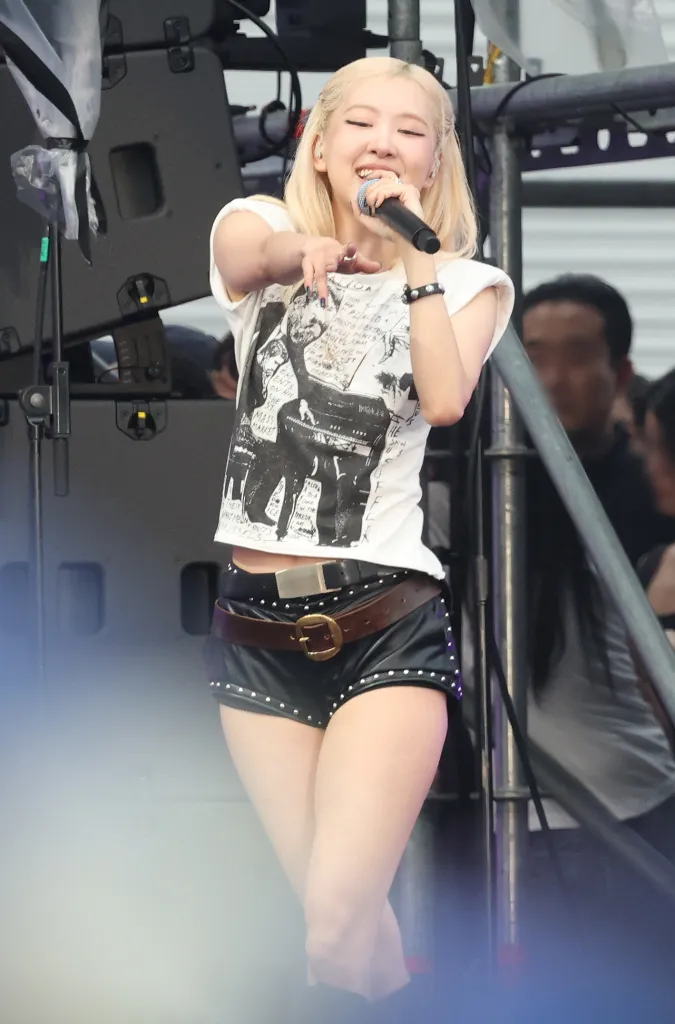
On November 7, the BLACKPINK member took the stage at LACMA’s 15th Annual Art+Film Gala, a black-tie fundraiser that drew more than 600 guests from the art and film worlds to honor artist Vija Celmins and director Denis Villeneuve, and ultimately raised nearly $7 million for the museum. Rosé performed a four-song set “APT.,” “Number One Girl,” the live debut of “New Trick,” and a cover of The Killers’ “Read My Mind.” Within a day, one performance from that set had split the internet in half.
The Clip That Launched a Thousand Comments
The Hollywood Reporter posted footage of Rosé’s live rendition of “APT.” to X on November 8 KST. By November 11, the clip had crossed 3.4 million views and the replies were brutal. “This is horrible. It sounds like a middle school talent show,” one user wrote. Others piled on: her voice was “too average” for someone this famous, her breath control was failing mid-song, her stage presence lacked the command to hold a room. Some comments took direct aim at her reputation as BLACKPINK’s strongest vocalist, framing the clip as proof that title didn’t hold up live. The backlash was significant enough that India’s IndiaTimes ran its own separate story on the controversy on November 8.
It’s worth noting what made this clip different from a typical idol performance moment: there was no lip-syncing, no autotune, and reportedly no backing track cushioning her voice just Rosé, a live band, and every imperfection fully exposed. That’s precisely what fueled both sides of the debate. For critics, the rawness revealed vocal issues. For defenders, the rawness was the point.
The Other Side of the Argument: Blame the Mix, Not the Singer
Not everyone piled on. A meaningful contingent of commenters pushed back, arguing the criticism was misdirected not at Rosé’s voice, but at the arrangement and sound engineering around it. “This isn’t a song meant to be played with just a guitar. Take away certain instruments and the whole feeling changes,” one listener argued. Others zeroed in on the mix itself: “Her voice is sitting way too loud over the instruments. Whoever’s running sound needs to fix that.” It’s a technical critique that’s easy to overlook in a viral clip cycle, but a thin arrangement and an unbalanced mix can make even a technically sound vocal take sound exposed and strained especially on a song like “APT.,” which was built in the studio around a dense, percussive, almost chant-like production rather than a stripped-back acoustic read.
That distinction performer error versus production choices is at the heart of nearly every live-vocal controversy in pop music, and it’s rarely resolved to everyone’s satisfaction. What’s clear is that the gala arrangement of “APT.” asked Rosé to carry a song designed for maximalist production in a comparatively bare live setting, a tough assignment by any measure.
Meanwhile, the Covers Were a Hit
Here’s the part largely missing from the viral outrage cycle: the same set that produced the “APT.” backlash also earned Rosé some of her best live reviews in months. Billboard, reviewing her performance of The Killers’ “Read My Mind” on November 9, wrote that her live voice “sounded more powerful than ever and captured the emotion of the song” a notably different read on the exact same artist’s live instrument just songs earlier in the set. Music outlet Stereogum was similarly complimentary on November 10, praising how well she handled the track and specifically crediting her for skipping the obvious choice The Killers’ signature hit “Mr. Brightside” in favor of a deeper cut, calling it “a fine job” with the song.
The gala also marked the first-ever live performance of “New Trick,” a song from Rosé’s solo catalog that fans had not previously heard performed outside the studio recording itself a notable moment buried under the “APT.” discourse.

Context Matters: This Is the Song That Made History
It’s hard to overstate how much scrutiny “APT.” specifically invites every time Rosé performs it. The Bruno Mars collaboration spent 12 weeks at No. 1 on the Billboard Global 200, became both artists’ second chart-topping single, and was the single biggest-selling song globally in 2025 according to the IFPI Global Singles Chart making Rosé the first K-pop soloist to top that ranking. It also helped her become the first solo K-pop artist to perform at the Grammy Awards in February 2026, where “APT.” picked up nominations for Record of the Year, Song of the Year, and Best Pop Duo/Group Performance a first-ever nomination for a K-pop artist in one of the Grammys’ top four general-field categories.
In other words, “APT.” isn’t just a song in Rosé’s set it’s arguably the most-scrutinized three minutes she performs anywhere in the world right now, played constantly across award shows, late-night sets, and now, museum galas. Rosé also holds a Brit Award (the first Korean artist to do so), an MTV Video Music Award for Song of the Year (also a first for a Korean artist), eight Guinness World Records, and multiple MAMA and Melon Music Awards a résumé that makes the “how did she get famous” line of criticism particularly difficult to square with the facts, even if the specific vocal take under scrutiny had rough edges.
Why This Keeps Happening to Pop’s Biggest Names
There’s a familiar pattern here, and it’s bigger than Rosé. Live vocal controversies tend to erupt specifically around a artist’s biggest, most ubiquitous hit the song audiences have memorized from a polished studio master, making any live deviation feel jarring by comparison. Meanwhile, deeper cuts and covers, performed with lower stakes and less algorithmic amplification, often land better critically precisely because audiences arrive without a note-perfect studio recording to measure against.
What this moment really captures isn’t a verdict on Rosé’s talent it’s the brutal asymmetry of how viral clips travel. A rough 30-second cut from “APT.” will always outrun a glowing Billboard review of “Read My Mind.” The gala gave Rosé a real mixed night, technically speaking. The internet, as it tends to do, only wanted to talk about the lowest moment.
- HOT NEWS
- 'I Live Alone' Guk Sung-hwan reunites with ex-girlfriend Lee Cho-hee... Meeting at a class reunion
- BTS Jimin, Brazilian streamer Halloween costume theme... commemorating gaming connection
- ZEROBASEONE EMP, music show stage activities with pre-release song 'Run'
- Jo In-sung Recalls First-Take Swim With Jeon Do-yeon
- Reap, Meitu's EveLab Insight, and Pivota Sign MOU to Explore Bringing Agentic Beauty Shopping to Life



허블 정보
Copyright © 2017 Huvle All Rights Reserved
admin@huvle.com