
20 Years In The Industry Moon Ga-young Says She’s Finally Learned to Let Go
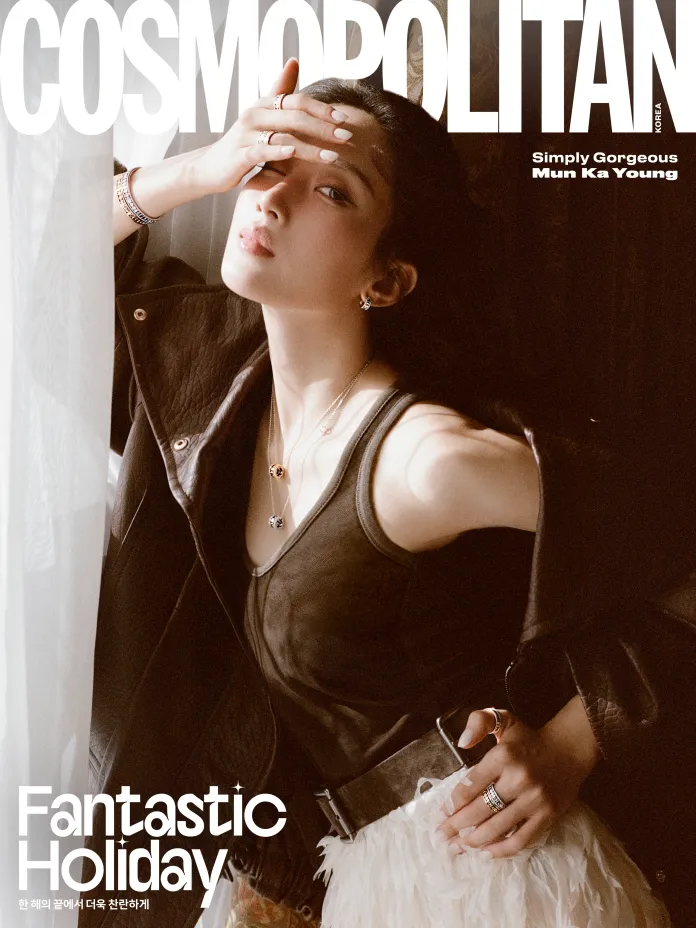
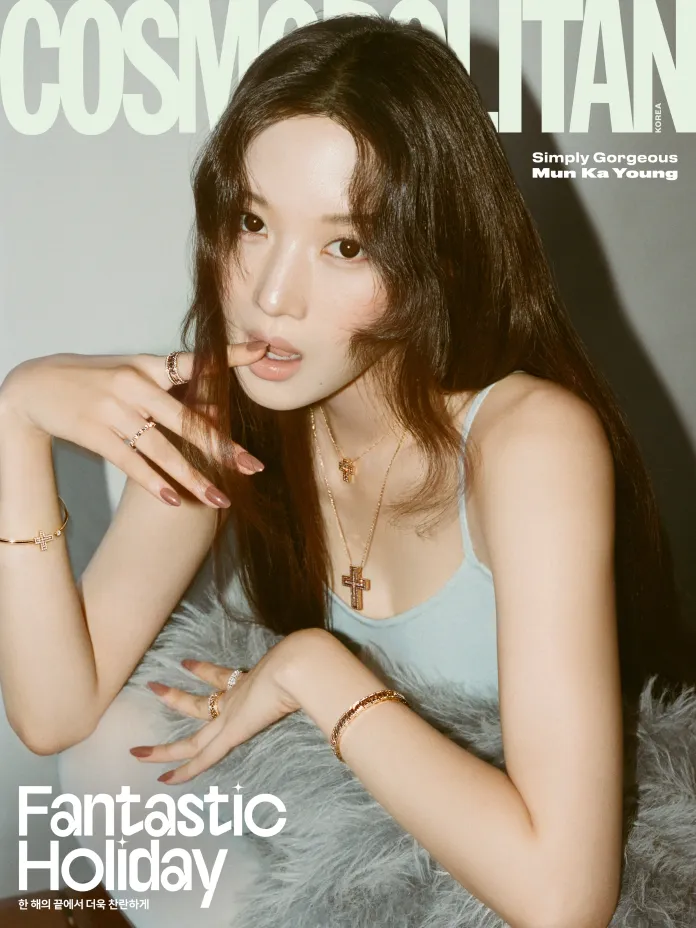
The Cosmopolitan Korea December cover star reflects on two decades in the industry, her breakout first adult lead role in “Once We Were Us,” and stepping into 1920s Gyeongseong for her upcoming tvN drama “Whale Star.”
Twenty years is a long time to stay visible in an industry built on turnover, and Moon Ga-young has spent nearly all of them growing up on camera. So when the actress sat down with Cosmopolitan Korea for its December cover story, her reflection on reaching that milestone wasn’t nostalgic in the usual sense it was something closer to a quiet inventory of what she’s learned to release.
Twenty Years, One Clear-Eyed Takeaway
“This year marked my 20th anniversary of debuting,” Moon told the magazine. “Maybe because I’ve found more peace of mind, I’ve become a little more clear-eyed about how I treat people and handle relationships. At the same time, I’ve gained a sense of ease. I love that I’ve learned to look at nature, even if just for a second longer.” Asked for a single phrase she’d want to leave behind as the year closes, she didn’t hesitate: “It’s passed.”
That phrase simple, almost offhand turns out to be something like a personal philosophy. “I think you have to let go of what’s already happened,” she explained. “Whether it was good or bad, constantly replaying it isn’t necessarily a good thing. If there was a mistake, I try to go over it carefully, and then move on from it.” She added, with a kind of settled contentment: “This year was good, and there were plenty of moments I’m proud of, but those are in the past too.”
It’s a notably measured way to talk about a milestone most actors would be tempted to mark with grand retrospection. But measured restraint has arguably become Moon’s signature at this stage of her career and the two projects she discussed alongside the anniversary reflection make the case for why.
From Child Star to First Adult Lead
Moon Ga-young’s debut goes back to 2006, when she entered the industry as a child actress in the horror film Bloody Reunion at age 10 she’d started as a child model the year before. What followed was a long, steady climb through teen and ensemble roles before she broke into leading-lady territory with The Tempted (2018), then genuinely arrived with Welcome to Waikiki 2 (2019) and the roles that made her a household name: Find Me in Your Memory and the massive hit True Beauty (both 2020), followed by The Interest of Love (2022) and My Dearest Nemesis (2023).
This year, though, marked a genuine first: her leading role in the film Once We Were Us, released theatrically on New Year’s Eve and ultimately drawing around 2.6 million admissions a strong box office result in Korea’s current theatrical climate. It’s a quietly significant distinction that the film represents her first lead role in a feature-length movie as an adult, after two decades built primarily on television. The melodrama, a remake of the 2018 Chinese film Us and Them, paired her with Koo Kyo-hwan in the story of two former lovers who reunite roughly a decade after their breakup the kind of slow-burn, time-skipping romance that lives or dies on its lead performances carrying real history between them.
Moon singled out the film’s airport farewell scene as her favorite moment on set, saying she still remembers the atmosphere of that shoot. She also recalled something her co-star told her repeatedly during their promotional tour: that “a film isn’t complete until the audience sees it.” Watching crowds respond to the movie across its theatrical run, she said, felt like taking her first steps all over again a striking image from an actress two decades into her career, suggesting this adult leading role genuinely felt like a fresh start rather than simply another credit.
Koo Kyo-hwan, for his part, has been having an unusually prolific run of his own 2026 alone has brought him appearances in the film Colony, the series We Are All Trying Here, and continued momentum off Once We Were Us, following his earlier string of hits including Kill Boksoon (2023), Netflix’s Parasyte: The Grey (2024), and Escape (2024).
Diving Into 1920s Gyeongseong
Moon’s other current project pulls her in an entirely different direction: Whale Star: The Gyeongseong Mermaid, an upcoming tvN drama adapted from Na Yoon-hee’s popular Naver webtoon of the same name, where she plays a character named Heo Su-a. Set in 1920s Gyeongseong the colonial-era name for Seoul, a period setting that’s become something of a moment in Korean television and film this year the drama will also star Choi Woo-sik.
Speaking about stepping into that world, Moon reflected on the emotional distance between then and now. “Because so much is different from today, the range of emotion you can access is different too,” she said. “Even so, I feel that the longing for love and freedom is a universal emotion that transcends era.” She didn’t hold back her affection for the role itself, calling meeting Su-a “an incredible stroke of luck.” Whale Star is currently aiming for a 2027 broadcast.
Twenty Years In, Still Choosing Carefully
What comes through across both projects a hard-won first adult film lead and a period drama rooted in a beloved webtoon is an actress being unusually deliberate about which roles she takes at a career inflection point most stars coast through. Moon Ga-young isn’t chasing volume twenty years in; she’s chasing meaning, and by her own account, she’s gotten better at knowing the difference and walking away from the rest. If “it’s passed” is really the phrase she wants to carry into the next chapter, it reads less like forgetting and more like making room for whatever Su-a, and whoever comes after her, still have to teach her.
- HOT NEWS
- K25 Group to Launch K25.fun, a Membership Platform for K-pop Fans Across Asia-Pacific
- ITZY’s Chaeryeong Brings ‘Lovesick’ to Music Shows
- Oh My Girl Hyojung, from bare face to dance practice...revealing a busy day
- Rosé Wears Saint Laurent Gold at Her First CFDA Awards
- Beyond Medical Group and Tamarind Health Advance Regional Expansion Through Strategic Partnership in Cambodia

허블 정보
Copyright © 2017 Huvle All Rights Reserved
admin@huvle.com