
Lee Se-young Explains the Contradiction Behind Rashta
The “Remarried Empress” actress discussed her physical preparation and why Rashta’s lovable appearance mattered to her interpretation.
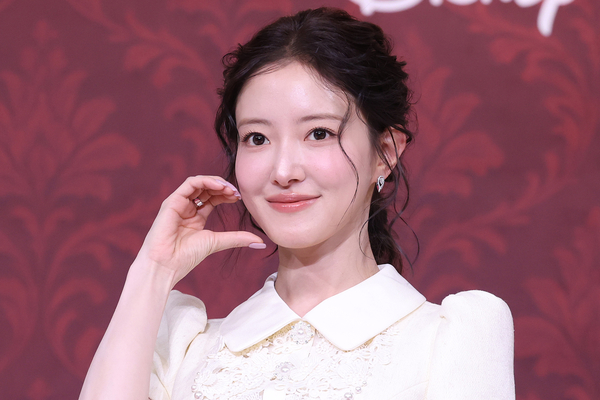
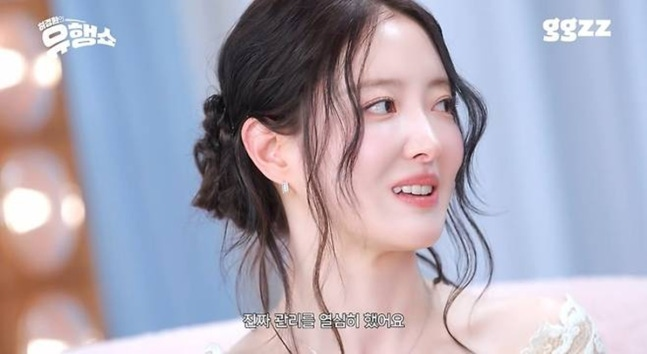
Lee Se-young approached Rashta with a contradiction in mind: the character needed to look lovable even when her words and actions made her difficult to like. Speaking on Heo Kyung-hwan’s talk show on the YouTube channel ggzz, the actress explained how the original webtoon influenced her preparation for “The Remarried Empress.”
According to Newsen’s account of the interview, Lee said the first thing she thought while reading the comic was that Rashta had to be beautiful. That was part of how she understood the character’s appeal within the story, where an apparently innocent young woman becomes a disruptive presence in the imperial household.
A Lovable Appearance, Difficult Choices
Lee’s explanation centered on the gap between Rashta’s presentation and her behavior. According to Sports Kyunghyang’s report, she felt the character possessed a lovable quality that stood apart from what she said or did.
That gave her a specific target when preparing the role. She wanted to do what she could to match the image she had taken from the webtoon, rather than approaching Rashta only through the antagonistic position she occupies in Navier’s story.
The distinction is useful for understanding the performance. A character can be appealing to someone inside a story while provoking frustration in the audience watching it. Lee’s comments suggest she considered that tension important to making Rashta’s place beside Emperor Sovieshu believable.
Her Account of Preparing for the Role
Lee also discussed changes to her routine. Both Sports Kyunghyang and Newsen describe her saying she had gained about eight kilograms after completing “Motel California” and later adjusted her eating habits while preparing for Rashta.
According to Sports Kyunghyang, Lee said she subsequently lost that weight. She described maintaining protein while reducing carbohydrates, and also spoke about frequently applying sunscreen and sun spray because of the appearance she envisioned for the character.
These were Lee’s recollections of her own preparation. The interview reports do not provide a timeline, starting weight or independent measurement, and her comments about changes to her skin describe her personal impression.
The more revealing part of the discussion is the creative decision behind those preparations: she had already formed a clear picture of Rashta before stepping into the costume. Her appearance was one element of translating that picture into a live-action character.
Rashta’s Innocence Has an Edge
Lee has discussed the character’s behavior elsewhere as well. At the series’ production presentation, according to iMBC’s report, she described Rashta as childlike and connected her intense desires to the need to survive. She also said the opportunity to play a villain who could be both unlikable and lovable attracted her to the project.
That earlier explanation adds an acting dimension to the talk-show story. Rashta’s outward softness exists alongside ambition, insecurity and choices that hurt other people. The challenge is to let those qualities coexist without reducing the character to a single expression or attitude.
Our analysis is that the contrast works on two levels. Sovieshu encounters someone whose charm draws him in, while viewers have access to conflicts that complicate that impression. The same appearance can therefore carry different meanings depending on who is looking and what they know.
A Character Surrounded by Competing Interests
Rashta also exists within a network of people who have reasons to influence her future. WIKIPICKY’s introduction to the supporting characters explored how figures such as Viscount Rotesch and Lady Albani bring concealed history and family ambition into the palace.
That context keeps the discussion of her appearance connected to the larger drama. Her position depends on relationships, status and information, giving Lee more to play than a straightforward competition over who attracts the emperor’s attention.
Across the story, contrasting ways of expressing affection also shape the central romance. Our coverage of Heinrey’s softer royal side examined how his manner changes around Navier. Lee’s comments offer a parallel look at how another performer defines a character through the distance between outward presentation and inner motivation.
The talk-show appearance ultimately supplies a specific insight into her process: Lee began with the webtoon’s image of Rashta, then considered how that image could coexist with behavior that makes the palace increasingly unstable.
- HOT NEWS
- Short-haired radical transformation on the sandy floor... Tomorrow X Together (TXT) releases teaser for mini 9th album
- NOL World Launches Black Friday Accommodation Deals in Seoul and Busan
- Utility Global and Tata Steel Plan to Deploy Utility's First Industrial H2Gen® Project in India
- Park Jeong-cheol, CEO of Hanstar Media, takes a commemorative photo with singer Noh Soo-hyun [Photo]
- Solbi and Lee Kyu-han, first variety show appearance after marriage announcement... traveling together in Japan


허블 정보
Copyright © 2017 Huvle All Rights Reserved
admin@huvle.com