
“She Doesn’t Explain, She Just Lets You Feel It”: Why International Critics Can’t Stop Talking About Shin Min-a’s Empress
There’s a scene in episode seven of The Remarried Empress where Shin Min-a’s character hears her husband announce their divorce from behind a closed door and simply sinks to the floor. No scream, no sobbing, no dramatic music swell. Just the sound of a body giving out and a face that refuses to fully break. It’s the kind of restraint that’s easy to overlook and nearly impossible to pull off, and it’s exactly what’s gotten Collider, Screen Rant, and a stack of other international outlets talking.
For an actress two decades into her career, that’s not a small thing. It’s proof that the genre everyone assumes they understand royal romantic fantasy, inherited from a web novel and webtoon with a devoted following can still surprise people when the right performer is given the room to underplay it.
A Marriage Built to Collapse Slowly
The Remarried Empress, now streaming weekly on Disney+, centers on Empress Navier of the Eastern Empire, a woman whose composure and political intelligence have long been her defining traits and whose marriage to Emperor Sovieshu (Ju Ji-hoon) is unraveling in real time. Episodes 7 and 8, released November 18, hinge on the moment Navier’s internal armor finally cracks: she overhears Sovieshu’s divorce announcement before she’s told directly, and Shin plays the aftermath almost entirely through stillness, letting silence and eye contact carry the scene’s grief rather than dialogue. Where a lesser adaptation might reach for a tearful monologue, the show and Shin’s performance bets on withholding instead.
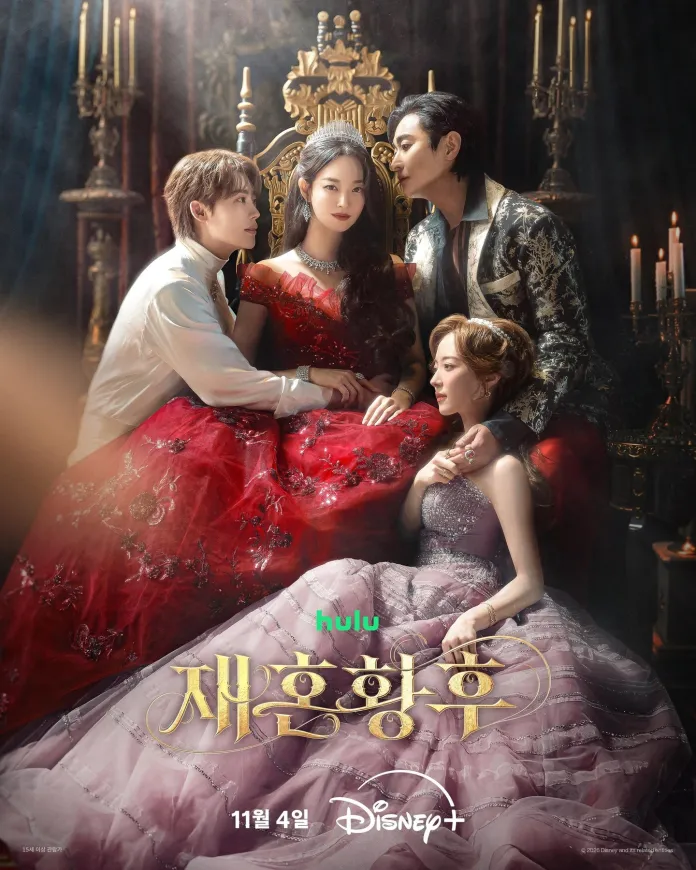
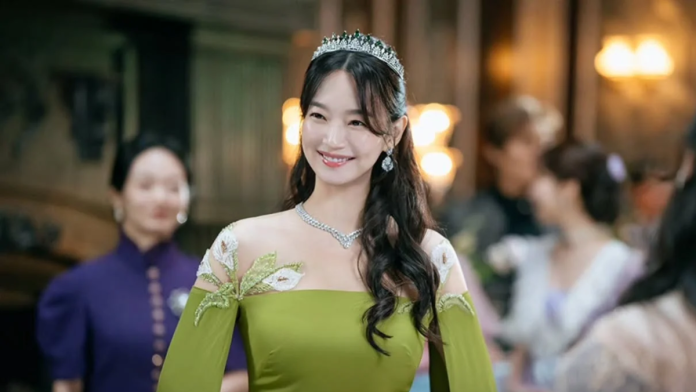
What makes the sequence resonate is what Navier does next: rather than retreating into her own devastation, she volunteers to lead the Eastern Empire’s delegation to a neighboring kingdom’s coronation. It’s a small narrative pivot with outsized meaning a woman choosing duty and agency over collapse, without the show overplaying the nobility of the choice. Shin renders it matter-of-factly, which is precisely why it lands.
Why the International Trade Press Is Paying Attention
It’s worth pausing on how unusual it is for a Korean fantasy-romance adaptation to pull commentary from Collider, Screen Rant, Forbes, Variety, The Hollywood Reporter, and Deadline simultaneously, all within weeks of its premiere. Collider specifically praised Shin’s ability to communicate Navier’s inner life without relying on expository dialogue, arguing the performance is what makes audiences emotionally invest in and root for the character. Screen Rant framed the imperial court’s web of betrayals and power struggles as a stage built specifically to showcase the breadth of Shin’s emotional range, while Japan’s Anime News Network singled out the quieter rapport between Navier and her pet, Queen, as one of the series’ more affecting threads. That’s a notably broad spread of outlets genre press, trade press, and international entertainment press all converging on the same point: the performance, not just the source material’s built-in fan base, is driving the conversation.
Two Decades in the Making
Context matters here. Shin Min-a has spent over twenty years building a career on precisely this kind of understated emotional precision from her breakout in A Love to Kill (2005) through the fantasy-romance hit My Girlfriend Is a Gumiho (2010), the historical drama Arang and the Magistrate, and more recent, quietly acclaimed work in Hometown Cha-Cha-Cha (2021) and Our Blues (2022), both of which leaned on her ability to communicate complex emotional states without over-dramatizing them. The Remarried Empress marks her first major fantasy epic in this vein since Gumiho, but the genre dressing empires, coronations, political marriages is really just scaffolding for the same skill she’s refined across her entire filmography: saying more with less.
She’s also working alongside a cast built for exactly this kind of ensemble pressure-cooker Ju Ji-hoon as the emperor whose betrayal sets the plot in motion, alongside Lee Jong-suk and Lee Se-young rounding out the story’s central romantic and political entanglements. Each actor brings a distinct interpretation to characters readers of the original web novel and webtoon already have strong opinions about, which only raises the stakes on Shin’s performance carrying the emotional center of the piece.
What’s Left to Watch
With the ten-episode series releasing two new episodes every Wednesday and a finale on the horizon, the real question is how Navier’s arc resolves whether her choice to serve the empire over nursing her own wound becomes a throughline of quiet strength, or whether the back half finally lets her devastation surface more visibly. Either way, Shin has already made the case for why this adaptation deserved global attention beyond its built-in fanbase: not spectacle, but the discipline of a performer who understands that the most powerful reaction is sometimes the one you don’t show at all.
- HOT NEWS
- [TF Magnifying Glass] Kim Seung-woo sued for alleged theft, 'shocking'... Similar cases have occurred before
- BTS’s V Brings Fans to a Toast Shop, Owner Says
- Lee Jong-suk Gives Heinrey a Softer Royal Side
- "Great Escape: Urban Legends," re-edited with adjusted screen time for Go Kyung-pyo... First release on December 2
- IVE Autumn, K-Roman Web Novel Presentation Held at 'Temperature of Autumn'


허블 정보
Copyright © 2017 Huvle All Rights Reserved
admin@huvle.com