
"Ancient Capitals of Asuka and Fujiwara" Inscribed as a World Heritage Site!
A Journey to the Ancient Capital of Nara Aboard Kintetsu Railway's Commemorative Train
OSAKA, Japan, Aug. 10, 2026 /PRNewswire/ -- On July 26, 2026, a new World Heritage Site was added in Japan. The "Ancient Capitals of Asuka and Fujiwara," located in the Kansai region prefecture of Nara, was inscribed on the World Cultural Heritage List of the United Nations Educational, Scientific and Cultural Organization (UNESCO), becoming Japan's 27th World Heritage Site. Kintetsu Railway, the region's main means of transportation, has announced the operation of a special train called the "Asuka-Fujiwara Shijin Liner," and momentum is building to celebrate the birth of this new World Heritage Site.
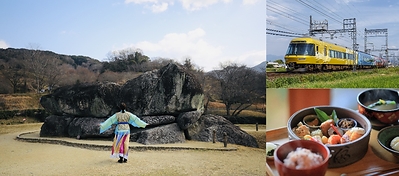
Asuka-Fujiwara extends across Asuka Village, Kashihara City, and Sakurai City in Nara, and comprises numerous ruins and structures, including the Asuka Palace Site, the Asuka-dera Temple Site, the Ishibutai Tumulus, and the Tachibana-dera Temple Site. Their history dates back roughly to the 6th and 7th centuries. At that time, the area served as Japan's political center, boasting a history that predates both Heijo-kyo and Heian-kyo. For this reason, Asuka is also known as "the birthplace of Japan."
The "Ancient Capitals of Asuka and Fujiwara," Japan's 27th World Heritage Site, symbolizes the very ground on which the nation of Japan was born. During the Asuka period, which began around the end of the 6th century, a centralized system of government under the emperor gradually took shape through the reforms of Prince Shotoku—one of Japan's most renowned statesmen of the era—and the political reforms known as the Taika Reform. The Asuka Palace Site and Fujiwara Palace Site are significant palace ruins that offer a glimpse into this era's history.
The Asuka area is also home to temples with long histories. Asuka-dera Temple enshrines the Great Buddha of Asuka, regarded as Japan's oldest surviving gilt-bronze Buddha statue. In addition, the principal image of Okadera Temple, Nyoirin Kannon, stands approximately 4.85 meters tall and is the largest surviving clay statue in Japan.
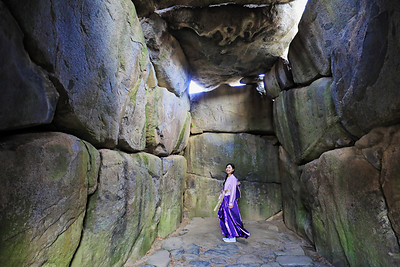
The area is also home to the Kitora Tumulus, known for its exquisite murals, and the Takamatsuzuka Tumulus, where vividly colored murals have been preserved. The Ishibutai Tumulus is one of the largest tumuli in Japan, featuring a stone chamber built by stacking massive stones weighing over 1,000 tons in total. Through years of research and investigation, the true nature of these various tumuli has gradually come to light, yet many mysteries remain unsolved—which is precisely what makes them so fascinating.
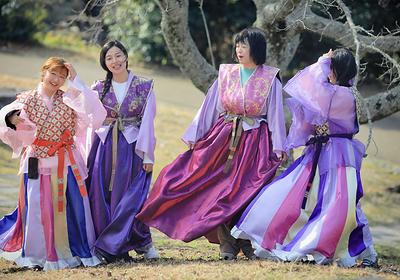
Beyond exploring these expansive ruin complexes, newly inscribed as World Cultural Heritage Sites, visitors can also rent and dress in ancient costumes, enjoying the experience of seemingly traveling back through time to the Asuka period.
The area also offers Japanese restaurants and cafés housed in renovated traditional houses, where visitors can savor local cuisine in a setting rich with historical atmosphere. Visitors can also enjoy fruit-picking experiences featuring "Asuka Ruby," the region's specialty strawberry.
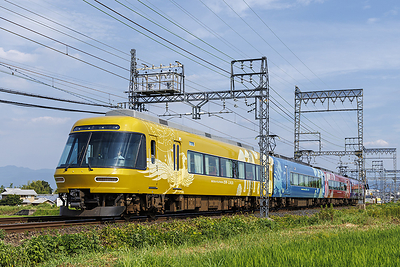
Kintetsu Railway, one of Kansai's leading private railway operators, serves as the main means of transportation in the Asuka area. From Osaka, Kyoto, or Nagoya, travelers can use Kintetsu to reach Asuka, Yoshino, and beyond. To commemorate the World Heritage inscription of the "Ancient Capitals of Asuka and Fujiwara," Kintetsu will begin operating the distinctively designed "Asuka-Fujiwara Shijin Liner" from August 1, 2026, offering rail journeys infused with history and culture.
With the World Heritage inscription of Asuka-Fujiwara, Nara's Asuka Village and its surrounding areas are expected to attract even more visitors. Kintetsu Railway is an ideal public transportation option for avoiding traffic congestion.
In commemoration of the World Heritage Site inscription, Kintetsu is operating the "Asuka-Fujiwara Shijin Liner," which features a unique design inspired by the "Four Symbols"—the guardian spirits of the four cardinal directions that protected tombs and palace capitals (Seiryu of the East, Byakko of the West, Suzaku of the South, and Genbu of the North)—as depicted in the stone-chamber murals of the Takamatsuzuka and Kitora tumuli. Motifs inspired by the "Ancient Capitals of Asuka and Fujiwara" and the tranquil local landscape have also been incorporated into the interior and exterior design, giving the train an atmosphere befitting a vehicle commemorating the area's new status as a World Heritage Site.
By taking advantage of the Kintetsu rail network, including the commemorative train, travelers can also explore even more of the charms Kansai has to offer. Among other rail passes, the KINTETSU RAIL PASS is designed for international tourists. With this pass, travelers can plan the ideal itinerary and more easily visit distinctive spots along the line, including the "Ancient Capitals of Asuka and Fujiwara."
Kintetsu connects major cities in the Kansai and Chubu regions, with its lines also passing through other World Heritage Sites. From urban scenery to Japan's unspoiled natural scenery, tourists can experience the charms of both city and countryside through railway travels.
Why not take this opportunity to embark on a journey to explore this new World Heritage Site, the era it represents, and the tourist destinations of Japan's Kansai region?
 View original content to download multimedia:https://www.prnewswire.com/apac/news-releases/ancient-capitals-of-asuka-and-fujiwara-inscribed-as-a-world-heritage-site-302845641.html
SOURCE Kintetsu Railway Co.,Ltd.
- HOT NEWS
- 'You Quiz' ranks 4.7% in the metropolitan area and 1st in its time slot... Special episode featuring Lee Eun-gyeol, Eum Moon-seok, and Lee Seung-chul shined
- JINRO Unveils Global Limited-Edition 'K-POP Star Toad' Green Grape
- Black Pink celebrates 10th anniversary with fan event... only 40 invited, fans express disappointment "apology for lack of communication"
- Macnica Invests in Malaysia's Leading Digital Transformation Company, Orangeleaf Consulting, to Expand Digital Transformation Services for Japan's Manufacturing Industry
- Culture Rebounds After the Earthquake! The 5th "Taroko • Mountain Market" Takes Place August 15-16



허블 정보
Copyright © 2017 Huvle All Rights Reserved
admin@huvle.com