
Want to Live in Seoul? Here’s What Foreigners Should Know Before Signing a Lease
So you want to live in Seoul.
Maybe you have spent a few weeks in Korea and decided you are not ready to leave. Maybe you are coming for work, university or a longer stay. Either way, finding somewhere to live is when the Seoul experience suddenly becomes much more complicated.
Korea’s rental system works differently from what many foreigners are used to, and the first numbers you see can be surprising.
A studio might look affordable at ₩600,000 a month until you discover the landlord also wants a ₩10 million deposit.
Before panicking, here is what you need to know.
1. Your biggest obstacle may simply be language
Walk around almost any residential neighborhood in Seoul and you will see dozens of offices marked 부동산, meaning real estate agency.
These local agencies are often the fastest way to find apartments that are actually available in the neighborhood.
The problem?
Many agents primarily work in Korean. You do not need to be fluent, but knowing basic housing vocabulary can make the process much easier. Useful words include 보증금 (deposit), 월세 (monthly rent), 관리비 (maintenance fee), 원룸 (studio) and 계약 (contract). That said, foreigners do not necessarily have to handle everything in Korean. Seoul maintains information on real estate agencies offering services in languages including English, Chinese and Japanese, while the Seoul Foreign Resident Center also provides multilingual real-estate consultation.
If you are uncomfortable understanding a Korean contract, getting help before signing is much cheaper than discovering a problem afterward.
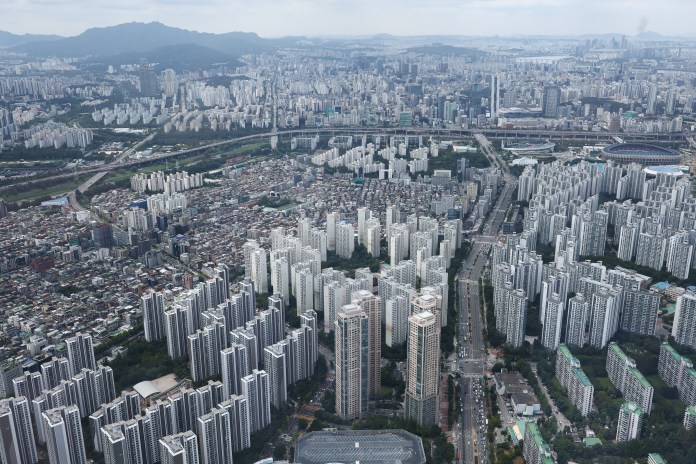
2. Online listings are useful but don’t treat every listing as reality
Apps and websites can give you a good idea of what is available and how much an area costs.
But they should usually be the beginning of your search, not the end.
Some rooms disappear quickly, and the apartment you saw online may already be rented by the time you contact the agent. More importantly, you should see the property and verify the contract before transferring a large deposit.
Using a licensed real estate agent can also give you an extra layer of help when checking the owner, explaining contract conditions and confirming fees. Korea’s official housing guidance recommends carefully checking information in the lease and the landlord’s financial situation, particularly when a large deposit is involved.
That becomes especially important because Korean rental deposits can be much larger than newcomers expect.
3. Yes, that huge deposit is normal
This is probably the biggest surprise for first-time renters.
Korea commonly uses two rental systems: wolse (월세) and jeonse (전세).
Wolse is closest to the monthly-rent system foreigners may already know. You pay a security deposit plus rent every month.
But the deposit is usually substantial. Seoul’s official guidance says a wolse deposit is commonly around 10 to 20 times the monthly rent, although actual arrangements vary significantly by property. The deposit is normally returned when the lease ends, minus unpaid rent, utilities or other outstanding obligations if applicable.
For ordinary studios, foreigners may encounter deposits ranging from a few million won to ₩10 million, ₩20 million, ₩50 million or more, depending on the neighborhood, building and rent.
And jeonse is another level entirely. Under jeonse, the tenant gives the landlord a very large lump-sum deposit instead of—or in some arrangements in exchange for very low—monthly rent. The landlord must return that deposit when the contract ends. For someone new to Korea, the numbers can initially look unbelievable. They are also why checking the property and contract carefully is so important.
4. Bigger deposit can sometimes mean lower monthly rent
Here is where Korean housing becomes interesting.
The deposit and monthly rent are often negotiable against each other.
A room advertised at: ₩10 million deposit / ₩600,000 monthly rent may sometimes be available with a lower deposit and higher rentor a higher deposit and lower rent—if the landlord agrees.
Do not look only at the monthly rent when comparing apartments. Calculate how much money will be tied up in the deposit as well. For context, one Seoul rental-market report placed the average monthly rent for a small one-room home at around ₩640,000 with a ₩10 million deposit in late 2025, though prices vary sharply by district.
A cheap-looking monthly rent can therefore come with a very expensive entrance ticket.
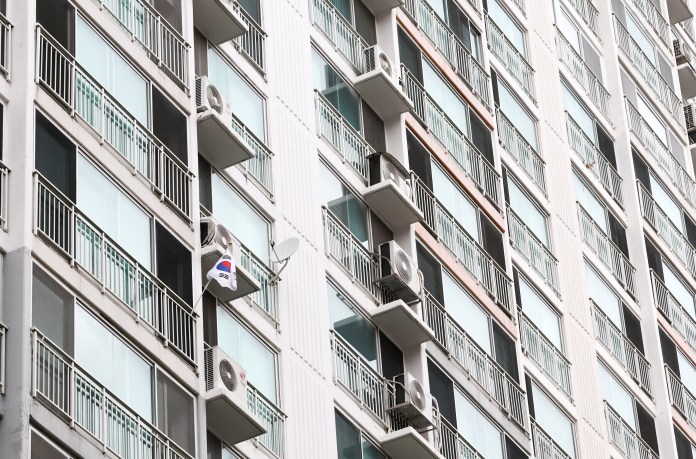
5. Check the management fee before celebrating a cheap apartment
You find a beautiful apartment where the deposit is reasonable, the rent, surprisingly cheap. Then comes another number:관리비 also known as management fees. Management fees can cover items such as building maintenance, elevators, internet, water or shared facilities, depending on the property. If a building does not have an elevator for example, the management fee is lower.
Electricity, gas and other utilities may still be separate. Always ask exactly what is included. A ₩550,000 apartment with a ₩150,000 management fee is effectively much closer to a ₩700,000 monthly housing cost than the headline rent suggests.
6. After moving in, don’t forget your address registration
Getting the keys is not the final step.
Registered foreign residents who move to a new address generally need to report the change of residence within 14 days. Seoul’s 2026 living guide says this can be handled through the relevant district office, community service center or immigration office.
This is also a good time to ask about obtaining a 확정일자, often translated as a “fixed date.”
It may sound like obscure paperwork, but it can become important in establishing legal protection connected with your lease deposit. Seoul says the fixed date can be obtained through the community service center or relevant registry after the moving-in report.
For foreigners putting millions of won into someone else’s hands, this is paperwork worth understanding.
7. Where should you actually look?
Everyone wants Hongdae, Gangnam, Itaewon or Seongsu until they see the rent.
If your priority is getting more space for less money, looking several subway stops away from Seoul’s most fashionable neighborhoods can make a dramatic difference.
Sillim is one of the best-known budget areas, particularly for students and younger renters. Located on Line 2 in Gwanak-gu, it has a huge supply of studios, goshiwons, inexpensive restaurants and late-night businesses. Recent 2026 rental guides continue to place Sillim among Seoul’s more affordable areas for one-room housing.
Hwagok-dong in western Seoul is another area worth comparing if you do not need to live in the city center. Its biggest advantage can be finding more residential options for your budget while remaining connected to the rest of Seoul.
Dangsan, meanwhile, can appeal to people who care about transportation. Its access to both Subway Lines 2 and 9 makes areas around it convenient for reaching Hongdae, Yeouido and Gangnam. That convenience can also make some properties more expensive, however, so do not automatically assume every room there will be “cheap.”
The real secret to Seoul house hunting is that prices can change enormously within only a few subway stops or even a few streets. So instead of asking, “What is the cheapest neighborhood in Seoul?” ask: Where can I live cheaply without making my daily commute miserable?
8. Never rush because an agent tells you someone else wants the room
Seoul apartments can move quickly. That does not mean you should sign a contract you do not understand. Before handing over a large amount of money, make sure you understand the deposit, rent, management fee, contract period, move-in date, included furniture and appliances, rules on pets if relevant, and conditions for leaving before the lease expires.
Also look at the apartment like someone who actually has to live there. Open the windows. Check the water pressure. And most importantly look out for mold. Since weather in Korea is humid in summer many houses have problem handling mold especially older buildings.
Find out whether the “first floor” is really halfway underground. And walk from the apartment to the subway station rather than trusting a listing that says “5 minutes from station.” Five minutes in a Korean property advertisement can occasionally feel very different when you are carrying groceries uphill in August.
Seoul housing is complicated but manageable
Renting your first apartment in Korea can feel overwhelming because the system is unfamiliar. There are large deposits, Korean-language contracts, brokerage fees and administrative steps that may not exist in your home country. But once you understand wolse, deposits, management fees and address registration, the system becomes much less intimidating. And there is one advantage to Seoul house hunting that newcomers quickly discover: There are an enormous number of neighborhoods.
You may arrive dreaming about an apartment in Hongdae and end up discovering that you prefer Sillim, Hwagok, Dangsan—or somewhere you had never heard of before moving here. The best Seoul apartment is not necessarily the one with the most Instagrammable neighborhood.
It is the one where the deposit is safe, the contract makes sense, the commute does not destroy your soul—and you can actually afford to stay.
- HOT NEWS
- Lee Dong-wook reveals behind-the-scenes of 'Killers' Shopping Mall 2'... "From holding a knife to a pensive expression"
- 2026 TME Chinese Music Impact Summit Held: Music IP and New Growth Paths for the Industry in the AI Era
- Kim Yong Bin visits younger sibling Nam Seung-min's studio apartment... Son Bin Ah and Choo Hyeokjin make a surprise appearance after spotting 'girlfriend's traces'
- Why BTS’s “FAKE LOVE” Still Captivates Viewers as MV Hits 1.4 Billion Views
- Aitech Announces New U-C6850 SOSA-Aligned Rugged High-Speed Ethernet Switch/Router for Defense and Aerospace Systems



허블 정보
Copyright © 2017 Huvle All Rights Reserved
admin@huvle.com