
BTS’s Jung Kook Opens His “Vitamin Bag” and Shares a Candid Health Update
Jung Kook’s birthday broadcast began as another relaxed conversation with fans. Then he remembered that he needed to take magnesium.
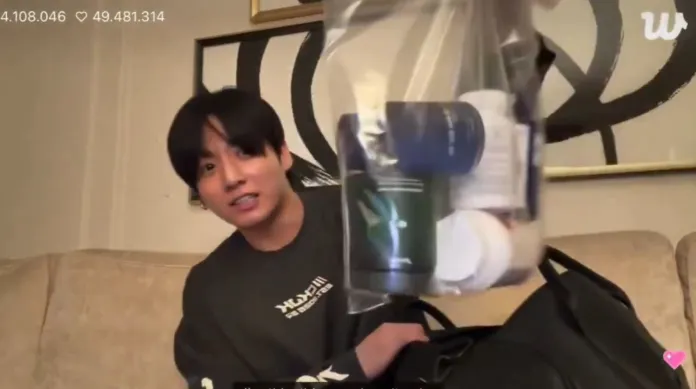
During his September 1 Weverse Live, the BTS member reached for a bag he described first as his “medicine bag” and then, more casually, as his “vitamin bag.”
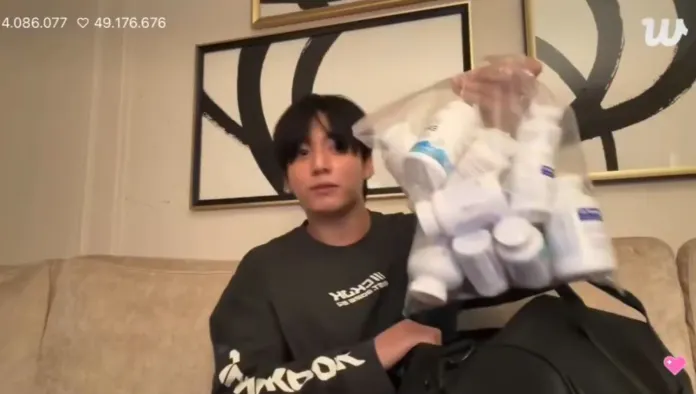
Inside was a large zippered pouch filled with white containers, supplements and medications for different situations. Even longtime fans appeared surprised by how extensively prepared he was.
Jung Kook began taking the items out one by one. He identified daily vitamins, medicine prescribed when he had a cold or swollen tonsils, treatment for skin inflammation and allergies, and medication he uses when he cannot sleep.
He also revealed that one prescribed medication was related to elevated liver levels.
“My liver levels became too high, so I was prescribed this,” he explained.
Jung Kook did not provide a diagnosis or further medical details, so his comment should not be interpreted beyond what he personally disclosed. Elevated liver enzyme results can have many possible causes and require interpretation by a medical professional.
A More Vulnerable Side of Jung Kook
The moment attracted attention because it contrasted with the image fans usually see onstage.
Jung Kook is known for demanding performances, intense workouts and the physical stamina required to sing and dance through a full BTS concert. His solo era further reinforced that image through athletic choreography and highly controlled live stages.
The vitamin bag showed the less visible work behind that performance.
For touring artists, maintaining health does not happen only in the gym. Constant travel, changing time zones, vocal strain, irregular meals and limited sleep can all become part of life on the road.
Jung Kook’s bag appeared to function as a personal emergency kit for that reality. It contained products for everyday nutritional routines as well as medications prescribed for specific symptoms.
His reaction also made the scene feel unmistakably like him. Rather than presenting the routine as a serious wellness lecture, he looked at the collection, admitted there was a lot and laughed at the size of it.
He Was Honest About Not Receiving Professional Supplement Advice
One of the most important parts of the conversation came when Jung Kook explained how he organized his vitamins.
He mentioned hearing that taking fewer than five vitamin pills may be preferable and said Jimin had also spoken to him about it. However, Jung Kook openly acknowledged that a pharmacist had not personally reviewed and arranged his current combination.
He said he had not experienced significant discomfort while taking the supplements. When he feels that the number has become excessive, he temporarily switches to a multivitamin for two or three days before returning to his usual routine.
His honesty kept the conversation relatable, but it also means fans should not copy the routine based on the broadcast.
There is no universal rule stating that everyone should take a particular number of supplement pills. Safety depends on the ingredients, doses, individual health conditions and any prescription or over-the-counter medications taken at the same time.
The US National Institutes of Health notes that supplements can cause side effects when taken in high doses or when several products are combined. Some can also interact with medications. The NIH recommends keeping a complete list of supplements and medicines and reviewing it with a doctor or pharmacist.
That advice is particularly relevant whenever prescribed medication, sleep aids and numerous supplements are being used together.
More Supplements Do Not Automatically Mean Better Health
Jung Kook’s collection may look like evidence of extremely careful self-management, but the number of bottles is not itself a measure of health.
Supplements can be useful when a person has a confirmed deficiency or a specific nutritional need. They do not replace balanced meals, adequate sleep or professional treatment.
Taking several products can also lead to overlapping ingredients. A multivitamin and separate vitamin products, for example, may contain some of the same nutrients.
Most vitamins are not generally linked to liver injury when taken within recommended ranges. However, the National Library of Medicine identifies high doses of vitamin A and niacin as notable exceptions. Multi-ingredient dietary products have also been associated with cases of supplement-related liver injury.
This does not mean Jung Kook’s supplements caused his elevated liver readings. There is no public evidence establishing such a connection, and attempting to diagnose him from a livestream would be irresponsible.
It simply explains why viewers should see the bag as a personal glimpse into his life, not a recommended wellness routine.
Fans Responded With Concern and Affection
Fans reacted with a mixture of surprise and tenderness after seeing the size of the pouch.
Some praised Jung Kook for carefully carrying the items he might need, while others encouraged him to consult a medical professional about the full combination. Many expressed the same simple hope: that he remains healthy during BTS’s demanding schedule.
That concern reflects the unusual closeness created by Weverse Live.
Onstage, fans see Jung Kook after the preparation is complete. During a livestream, they may watch him eat, fold laundry, listen to music or remember to take magnesium in real time.
Opening the vitamin bag turned an ordinary moment into something unexpectedly intimate. He was not performing the image of an artist with limitless energy. He was showing that maintaining that energy requires attention, routines and sometimes prescribed treatment.
A Candid Beginning to His Final Year in His Twenties
The broadcast came on Jung Kook’s 29th birthday.
Born on September 1, 1997, he entered the final year of his twenties as fans celebrated across several cities. Birthday advertisements and events appeared in Seoul, New York, Los Angeles, Shanghai and other locations, reflecting the global scale of his fandom.
Yet one of the day’s most memorable moments was remarkably small: Jung Kook sitting in front of a camera, opening a crowded pouch and explaining what he carries to look after himself.
It was not a glamorous birthday reveal, but it felt honest.
The moment reminded fans that behind the stadium performances and carefully produced images is a 29-year-old trying to understand his body, manage a relentless schedule and become more attentive to his health.
The most meaningful response is not to imitate the contents of his bag. It is to respect the openness with which he shared that part of his life and hope that professional guidance remains part of how he cares for himself.
UNIS is traveling back to 1997 for a song that became a hit years before any of its eight members were born.
The group will release its first remake single, “하늘땅 별땅,” on September 8 at noon KST. The song was originally recorded by the Korean female duo B.B and served as the title track of the duo’s second album.
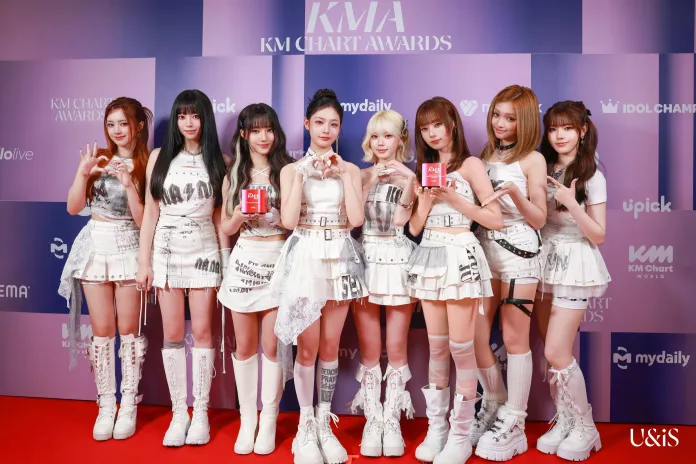
Nearly three decades later, Jin Hyeonju, Nana, Gehlee Dangca, Kotoko, Bang Yunha, Elisia, Oh Yoona and Lim Seowon will introduce it to listeners who may have never encountered the original.
That generational distance makes the project more interesting than a routine remake. UNIS is not simply covering a familiar senior artist’s song. The members are interpreting a piece of Korean pop history that belongs to a world they never personally experienced.
Why “Heaven, Earth and Stars” Fits UNIS
Originally released in 1997, “하늘땅 별땅” is remembered for its playful melody, energetic delivery and instantly recognizable refrain.
The Korean title loosely evokes the sweeping phrase “heaven, earth and stars,” giving an exaggerated, almost storybook quality to a song about affection. Its repetition and rhythmic phrasing helped make it memorable long before TikTok challenges and short-form dance clips became part of the music industry.
Those qualities could translate naturally into UNIS’s musical identity.
Since debuting, the group has frequently worked with bright colors, youthful confidence and high-teen imagery. The original song’s cheerful energy gives the members room to emphasize their personalities while introducing updated production and contemporary K-pop performance elements.
The remake will retain the original’s catchy melody while adding what F&F Entertainment describes as UNIS’s “kitschy high-teen” style. How much of the 1997 arrangement will remain has not yet been revealed.
More Than Another Y2K Concept
K-pop’s renewed fascination with the late 1990s and early 2000s has produced countless retro outfits, vintage cameras and nostalgic graphic designs.
A remake, however, demands more than wearing the right clothes.
Fans familiar with the B.B version will listen for the melody and personality that made the original memorable. Younger listeners will expect the song to feel natural beside UNIS’s existing music rather than sounding like a novelty cover.
That balance is the real challenge. If a remake changes too little, it risks becoming karaoke. If it changes too much, it can lose the emotional connection that made revisiting the song worthwhile.
For UNIS, the project is also an opportunity to reveal new vocal colors. Original releases are usually designed around an artist’s established image, but remakes place performers in direct conversation with an earlier interpretation. Each member must find a way to make the song feel like UNIS without erasing its identity.
A Korean Pop Memory Meets a Global Group
The choice becomes even more meaningful because UNIS represents a very different era of K-pop from the one in which B.B performed.
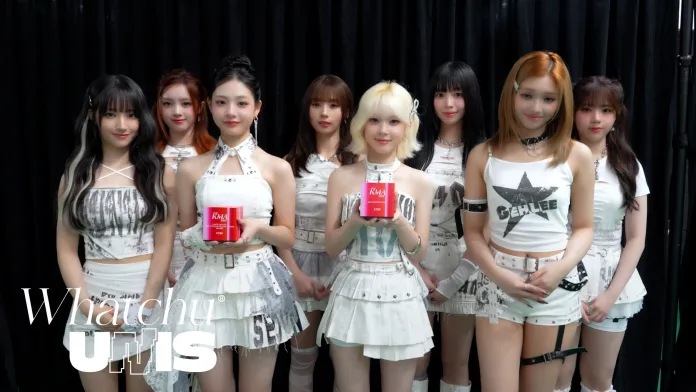
Formed through the SBS survival program Universe Ticket, UNIS debuted in 2024 with members from South Korea, Japan and the Philippines. The group was international from its beginning, reflecting a K-pop industry in which artists and fandoms increasingly cross national borders.
B.B released “하늘땅 별땅” before Korean pop had built today’s global distribution system. The song’s original audience largely encountered it through domestic television, radio, physical albums and local performances.
The UNIS version will reach fans instantly through global streaming services, social platforms and international fan communities.
For Korean listeners who remember the original, the remake may feel nostalgic. For international EverAfters, it could become an introduction to a chapter of Korean pop that existed well before the industry became globally dominant.
Arriving After UNIS’s Japanese Debut
The remake also follows UNIS’s first major Japanese release.
The group released its debut Japanese mini album, UNI☆Sparkle!, in July 2026. The album reached No. 4 on Oricon’s Daily Album Ranking, while Billboard Japan recorded it at No. 15 on its Top Albums Sales chart with an estimated 4,763 copies sold during the measured week.
Its title track, “GimmeSummer☆,” continued the bright and seasonal image associated with the group while helping UNIS establish an early presence in Japan.
Rather than immediately repeating that formula, UNIS is now turning toward an older Korean hit. The decision gives fans something familiar in spirit but unexpected within the group’s young discography.
It also creates an unusual cultural exchange. Japanese and Filipino fans who discovered UNIS through recent releases may now encounter a Korean song associated with the childhood and teenage memories of an earlier generation.
UNIS’s First Test With a Remake
“하늘땅 별땅” will be the first official remake released by UNIS since the group’s debut.
That distinction gives the single significance even if it is not positioned as the beginning of a larger album era. It will show how the members handle material that already carries strong memories and expectations.
The song also arrives at a point when UNIS is still defining its musical identity. A successful reinterpretation could demonstrate that the group’s youthful energy is flexible enough to work beyond newly written tracks.
Much will depend on the arrangement, vocal distribution and choreography. The original provides an irresistible hook, but the remake must offer a reason for listeners to choose the new version rather than simply returning to the 1997 recording.
For now, its most compelling idea is already clear: eight performers born in the 21st century are reaching into Korea’s 1990s pop archive and asking a new generation to sing along.
UNIS’s “하늘땅 별땅” will be released on September 8 at noon KST.
- HOT NEWS
- Stray Kids’ Felix Offers Quiet Comfort With Solo Song “Slow It Down”
- Lim Young Woong to release new song "Ttotto" on September 8... First revealed at the "IM HERO 10" full album concert
- OceanBase Named Top Distributed Transactional Database Vendor in Asia & Oceania in Omdia Report
- Electronic Recycling Association Expands Its Mission to New Zealand
- Kazia Therapeutics Limited Announces Oversubscribed Closing of Up to $120 Million Public Offering


허블 정보
Copyright © 2017 Huvle All Rights Reserved
admin@huvle.com