
‘I Threw Away the Pressure’: Byun Yo-han Dropped 10kg for a 3-Second Scene in Tazza’s R-Rated Finale
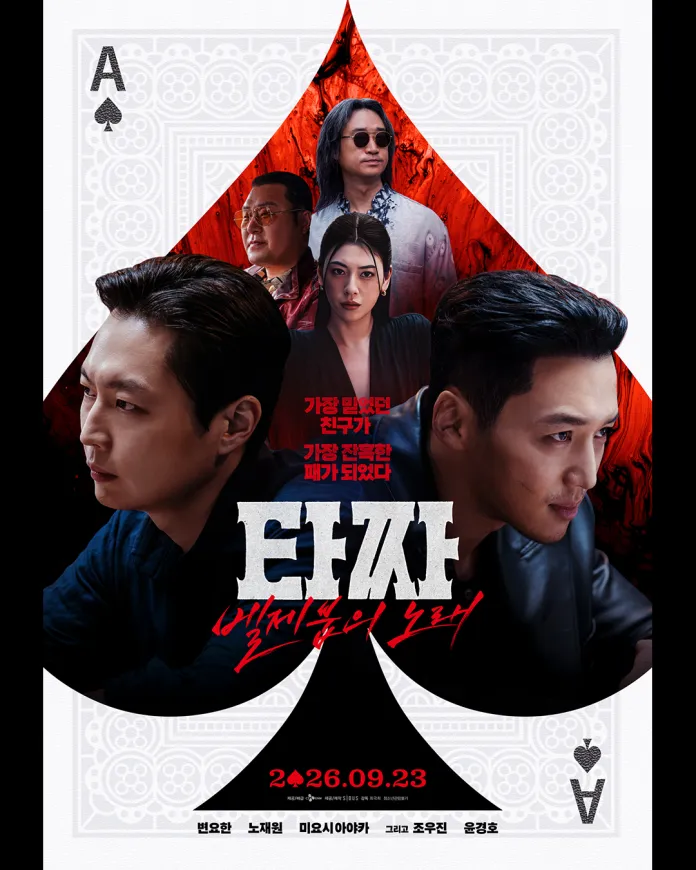
Twenty years ago, a small-town card sharp walked into an underground gambling den and 6.84 million Koreans followed him in. Now, the saga that began there is cashing out but not quietly. At a press conference on September 9 at CGV Yongsan iPark Mall in Seoul, the cast and director of Tazza: The Song of Beelzebub framed their film not as an ending, but as a final wager placed with everything on the table.
“I threw away the pressure of it being the last one,” star Byun Yo-han told reporters. “We banded together and completed our own Tazza.” It’s a telling line because closing out a franchise this beloved isn’t a task you win by playing it safe. It’s one you can only win by betting big.
A Saga Two Decades in the Making
To understand why this finale matters, you have to understand the weight of the name. Tazza: The High Rollers (2006), adapted from Heo Young-man’s landmark manhwa, wasn’t just a hit it was a cultural event. Directed by Choi Dong-hoon and anchored by Cho Seung-woo, Kim Hye-soo, and Kim Yoon-seok, it drew 6.84 million admissions to become the second-best-selling Korean film of 2006, a staggering feat for an R-rated title. Its lines and performances still circulate in viral clips today.
The franchise expanded into a 2008 television series and returned to theaters with Tazza: The Hidden Card (2014), which handed the lead to BIGBANG’s T.O.P. Across every iteration, one tradition held firm: Tazza belonged to Chuseok. The series has long staked its claim on Korea’s autumn holiday box office, and this finale opening September 23 takes dead aim at the same holiday crowd.
Director Choi Guk-hee, who takes the wheel for this closing chapter, didn’t approach the material as a hired hand. “I was a passionate fan of the original comic,” he said. “It was an honor to help make The Song of Beelzebub, the final film.”
Angels, Demons, and the Game Between Two Friends
The Song of Beelzebub is built as a spin-off, and it wears its darker palette openly. The story follows Jang Tae-yeong, a man who believed he’d conquered the world through an online casino empire, and Park Tae-yeong his closest friend, who strips it all away. What follows is a revenge drama dressed in the imagery of the fallen: the film draws its motif from Lucifer, the angel cast into hell, and Beelzebub, hell’s ruler. The genius of the framing is that the movie keeps you guessing which man is which, reversing their roles right up to the end.
The chosen game this time is Texas Hold’em, a deliberate shift onto a global stage. Every poker hand in the film was designed to be genuinely playable, and for viewers unfamiliar with the game, the terminology is explained through subtitles. It’s a smart move: Hold’em, with its flop, turn, and river, is built for psychological warfare. Each community card that hits the felt shifts the balance of power, forcing the players to read, bluff, and overturn their strategies in real time exactly the kind of slow-burn tension the Tazza name was built on.
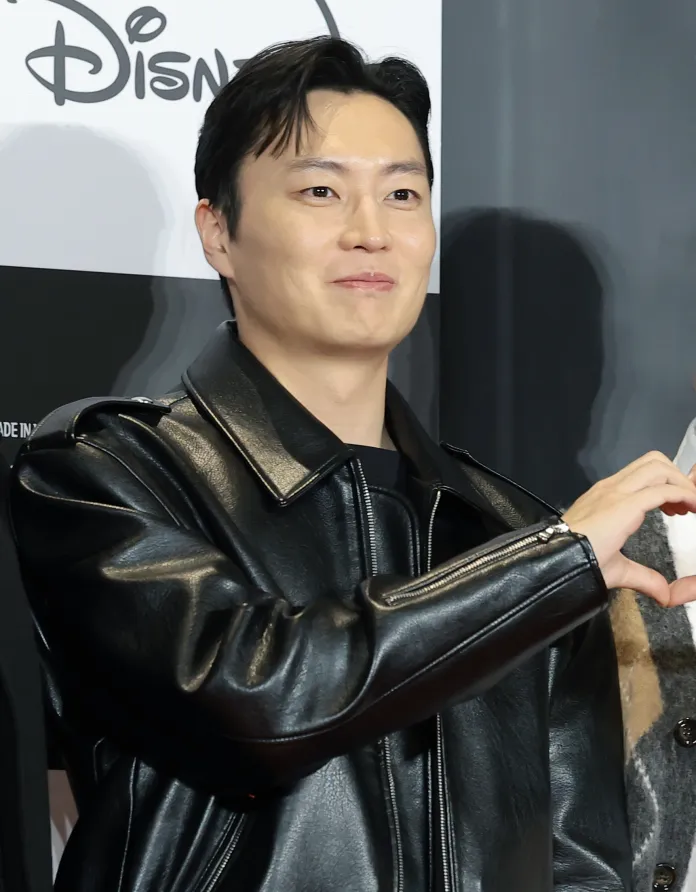
Byun Yo-han plays Jang Tae-yeong as a gambler who trusts his natural instinct and bets boldly, riding his casino success to the top before a friend’s betrayal sends him crashing down. His arc is the film’s spine: the man who once leaned on luck must relearn the fundamentals from scratch, finding a new mentor who teaches him not how to win, but how to lose. Byun performed in three languages Korean, English, and Japanese and made a pointed choice about the delivery. “In the English dialogue during the scene where he rests on the boat, I wanted to show Jang Tae-yeong’s growth. Rather than fluency, I pushed through with a rough energy,” he explained. He even dropped more than 10 kilograms for a brief shirtless moment: “It’s only a few seconds, but I gave it everything.”

A Rising Star’s Toughest Bet
If Byun anchors the film, Noh Jae-won gambles the most. Taking his first leading role in a commercial feature, he plays Park Tae-yeong a man who, unlike the naturally gifted Jang, has clawed his way up through sheer effort, only to be consumed by envy at a talent he can never match. When he finally pulls his friend down, his roar of triumph is meant to sound like the song of Beelzebub itself.
Choi cast him precisely for that texture. “Park Tae-yeong is an acquired genius who filled his gaps through his own effort,” the director said. “I needed a feeling of something missing, something lacking. After considering many combinations, I chose Noh Jae-won.” Noh delivered it in trembling eyes and a quavering voice and, revealingly, found his emotional fuel in his scene partner. “While filming, Park Tae-yeong and I overlapped,” he admitted. “Watching Byun, I felt envy, jealousy and at the same time, he was someone I wanted to learn from.” It’s rare to hear an actor describe the exact emotion of his character bleeding into his real experience of the role; here, the line between performance and lived feeling seems to have blurred in the franchise’s favor.
The World as a Poker Table
The supporting bench is stacked. Jo Woo-jin appears as Jang’s mentor and Yoon Kyung-ho as a contract killer, both serving as the protagonist’s benefactors and Byun called working with Jo transformative: “It felt like meeting a teacher I’d never seen before. I was fully immersed in that moment.” Widening the stage to a global gambling circuit meant an international cast, too, with Japan’s Ayaka Miyoshi (Kaneko), Hong Dao (Chairman Tao), and Tsuyoshi Ihara (Sasaki) joining the table. In a nice off-screen echo of the film’s language-swapping premise, the actors became each other’s tutors Noh credited Ayaka Miyoshi as his Japanese teacher, saying she carved out time for readings that widened his freedom with the dialogue.
The showpiece is the final group game, staged atop Vietnam’s “81 Landmark” tower, where the two leads wager an enormous pot in one last taut standoff. Noh promises it lands as more than a simple revenge beat: “It’s a story about betrayal and revenge, but the final scene holds complex emotions affection and remorse toward a friend, and a rage beyond even that.”
Cashing Out
There’s something fitting about a franchise built on desire choosing to end on its darkest, most human note. Choi describes the film as “entertainment for adults,” complete with bold bedroom scenes and action a deliberate return to the R-rated identity that made the 2006 original such an outlier hit. Whether Chuseok audiences will crown this finale the way they crowned its ancestor is the real gamble here; nostalgia can be a powerful draw, but so is the risk of a beloved name closing on anything less than a full house.
Byun, for his part, isn’t playing scared. “I threw away the burden of it being the last Tazza,” he said. Two decades after the first card was dealt, the series is going all-in one final time. Tazza: The Song of Beelzebub opens September 23.
- HOT NEWS
- Jockey Club concludes landmark 10th anniversary of PBC with Gala Dinner featuring delegates from around the world to celebrate a decade of global dialogue
- 'My Remaining Romance' Kim Seon-ho successfully matches for a date with Jung Ye-ji and Kim Na-young... The love triangle intensifies
- Can Doing Good Create Business Value?
- 'Lost 18kg' Hwang Jae-gyun reveals gaunt face... "Changed after retirement"
- Son Heung-min and V's friendship draws attention... Highlighted by US 'USA Today'



허블 정보
Copyright © 2017 Huvle All Rights Reserved
admin@huvle.com