
BIGBANG Sell Out 100,000 Seats Across 3 Nights at Taipei Dome
A trio reborn, a fandom unbroken: how BIGBANG turned a 20th-anniversary homecoming into the thunderous opening of their Asia tour.
Ten years is an eternity in K-pop. Groups form, peak, and disband in less time. So when the lights went up at Taipei Dome and the opening synths of “FANTASTIC BABY” rolled across a packed arena of 100,000 fans, the moment carried a weight that few acts in the genre could ever claim. BIGBANG the group that helped write the rules everyone else now follows was back in Taiwan, and the island had been waiting.
From October 9 to 11, BIGBANG staged BIGBANG 2026–2027 WORLD TOUR 〈XX : COSMOS〉 IN TAIPEI at the Taipei Dome, Taiwan’s largest concert venue, for three consecutive nights. Every seat sold out including the additional seats released to meet demand marking the group’s first solo concert in Taiwan since 2016. It was less a comeback than a reunion a decade in the making.
A City That Turned Into a Fan Project
Long before the first note, Taipei had already surrendered to BIGBANG fever. According to YG Entertainment, the group’s agency, BIGBANG-themed displays bloomed across the city on a landmark skyscraper, in parks, across subway stations while fans queued at a pop-up store near the venue for official merchandise. The dome itself became a pilgrimage site, with the surrounding plaza swelling with crowds hours ahead of showtime.
This is the kind of citywide takeover usually reserved for a stadium’s biggest night, not a routine tour stop. That it happened for a group’s first Taiwan appearance in ten years speaks to something K-pop rarely sustains: a fandom that doesn’t fade during the long silences.
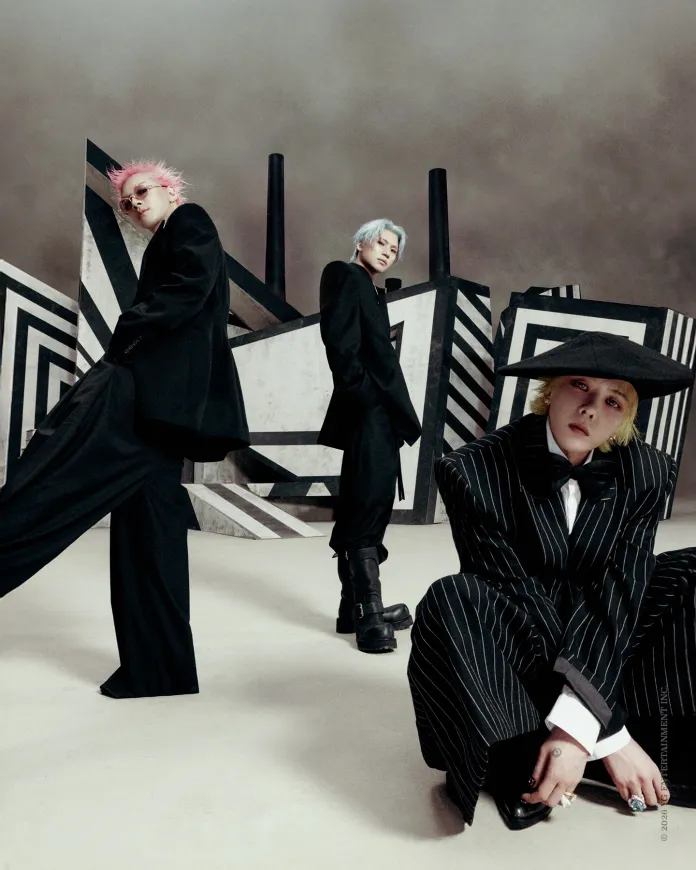
The Setlist as a Time Machine
Once inside, BIGBANG delivered a career-spanning parade of mega-hits. After “FANTASTIC BABY” came “LOSER,” “Haru Haru” (Day by Day), “Lies” (Geojitmal), and “BANG BANG BANG” a run of songs that, for many in the room, functions as a personal soundtrack to the last two decades. Each member also took the stage for a solo set, a reminder that BIGBANG has always been a collective of distinct artists rather than interchangeable parts.
The production fused large-scale staging, a battery of special effects, and crucially a live band sound. That last detail matters. In an era of polished backing tracks, BIGBANG leaned into live instrumentation, and the dome filled with fans of visibly different generations: those who grew up on “Haru Haru” in 2008, and younger listeners discovering the catalog through their TikTok afterlife.
Three Members, Not Five And Why It Still Works
Here is the context the celebration quietly carries: this is a different BIGBANG than the one that last played Taiwan. The group now performs as a trio G-Dragon, Taeyang, and Daesung following the departures of former members. The 〈XX : COSMOS〉 run is their first concert tour since the Last Dance tour wrapped in 2017, and their first full-lineup outing in roughly nine years, after a trial-run return at Coachella in April 2026 reintroduced them to a global audience.
That reconfiguration could have diminished the group. Instead, the trio has recast BIGBANG as something leaner and, arguably, more purposeful three veterans with nothing left to prove and everything to celebrate. “We are happy to celebrate BIGBANG’s 20th anniversary with V.I.P,” the members told the crowd, referring to the group’s fandom. “We do not take any of this for granted. We were able to come this far thanks to your love and support. We will do our best to repay that.” Coming from a group that has weathered more public turbulence than most, the gratitude landed as earned rather than scripted.
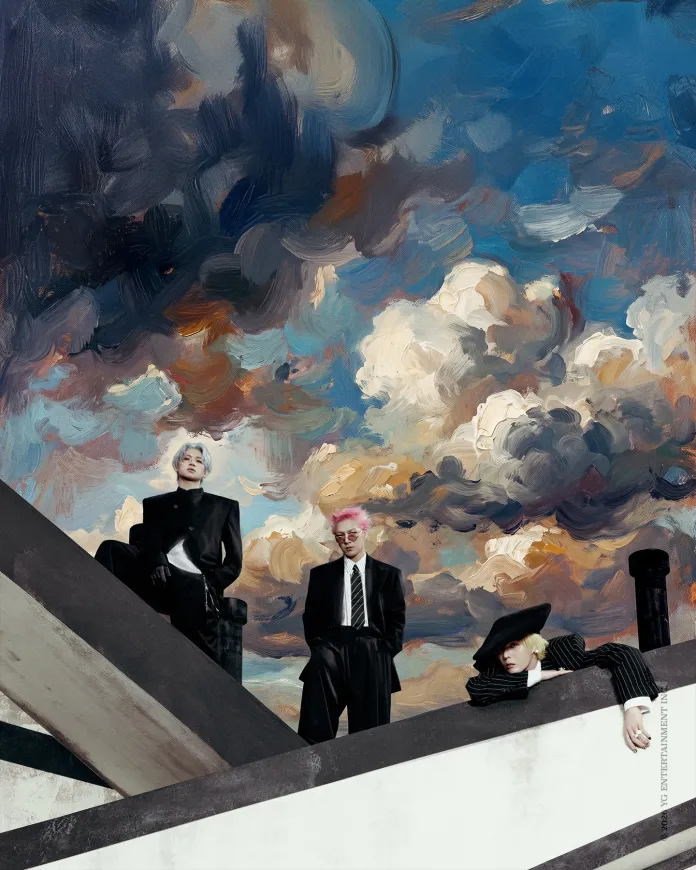
The Blueprint That Built Modern K-Pop
To understand why 100,000 people filled a dome for a decade-overdue return, you have to understand what BIGBANG represents. Debuting in August 2006, the group became the defining idol act of K-pop’s second generation, pairing hip-hop and electronic influences with a self-produced, genre-bending sensibility that was radical for its time. Hits like “Haru Haru,” “FANTASTIC BABY,” “BANG BANG BANG,” “Lies,” “Last Dance,” and “Last Farewell” didn’t just chart they expanded the idea of what a K-pop group could sound and look like. The acts that dominate global stadiums today are, in many ways, building on the template BIGBANG drafted.
What Comes Next
Taipei was only the opening salvo of the Asia leg. Having launched the tour in Goyang before sweeping through the Americas and Europe, BIGBANG now turns to Singapore National Stadium on October 17 and 18, with further stops planned in Bangkok, Hong Kong, Kuala Lumpur, and Jakarta. All told, the 〈XX : COSMOS〉 world tour is set to span dozens of shows across nearly 20 cities a scale that would be ambitious for an act at its commercial peak, let alone one marking twenty years.
And that may be the real story of the Taipei Dome nights. BIGBANG isn’t chasing relevance; it’s confirming permanence. A decade away did nothing to loosen the island’s grip on these songs if anything, the distance only made the reunion louder. As the Asia leg rolls on, the question isn’t whether BIGBANG can still fill a stadium. Taipei already answered that. The question is how many more cities are about to prove the same.
- HOT NEWS
- NCCN Highlights Collaborations to Improve Global Cancer Outcomes During Meetings in North America and Asia
- Epik High, camping to celebrate reaching 2 million subscribers... mentions 'Epicism' challenge and BTS participation conditions
- ANTA Sports Completes Acquisition of 29.06% Stake in PUMA, Becomes Largest Shareholder
- “Crash to Begin”: ATEEZ Set Sail for a New Era with Golden Hour: Part.6
- Arirang TV, Teams Up with Shindong, Kwon Hyuk-soo and Yujeong to Showcase Gyeongbuk's "Flavors and Charms" to the World!

![[Kang Il-hong's Close-up] The Essence of the 'Assassin(s)' Controversy... Did They Sell History or the Movie?](https://img.tf.co.kr/article/home/2026/10/10/20261384179168538600.jpg)

허블 정보
Copyright © 2017 Huvle All Rights Reserved
admin@huvle.com