
[Kang Il-hong's Close-up] BTS's "Future of K-Pop" Sells Experiences Beyond Music
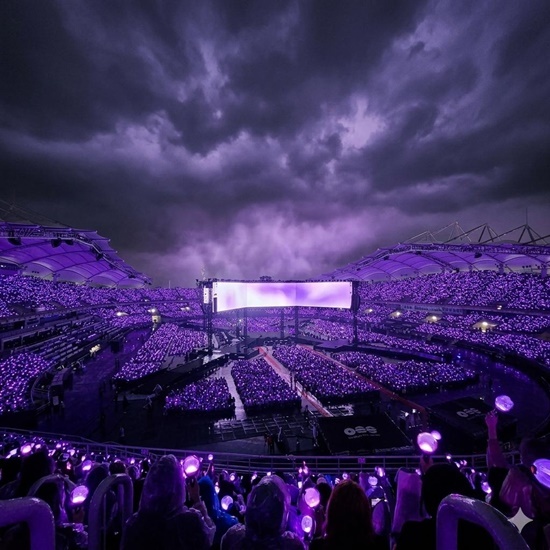 The Expansion of Fandom Economy Connecting Performances, Videos, and Travel with 'World Tour Ripple Effect''To theaters, to cities, to online communities'... Consumption ContinuesThe landscape of the K-pop industry has significantly changed since BTS's return. Moving beyond an era where success was measured by album and digital sales, it is now demonstrating the potential of a new cultural industry that unites performances, videos, travel, consumption, and fan communities. /AI Image[THE FACT|Reporter Kang Il-hong] The landscape of the K-pop industry has significantly changed since BTS's return. The comeback of a group that captivated the world with its music signifies more than just a team's return or the resumption of a world tour. This is because it is demonstrating the potential of a new cultural industry that unites performances, videos, travel, consumption, and fan communities, moving beyond an era where success was measured by digital and album sales.BTS embarked on a world tour following the release of their full-length album 'ARIRANG' in March 2026. This large-scale tour, resuming after approximately four years since 2022, is their largest project to date, with plans for 79 performances in 34 cities worldwide. The symbolic significance of the full group's activities, realized after a long wait, combined with the strengthened unity of the global fandom, has placed BTS once again at the center of discussions about the present and future of K-pop.What's noteworthy is that their success can no longer be explained by music as a single product. Buying albums and listening to songs remain important. However, today's fandom consumption does not end there. Fans book concert tickets, reserve accommodation and transportation near the venue, purchase official merchandise, and rewatch concert videos. This structure, where consumption and communication continue even after leaving the stage, is the change that the K-pop industry must pay attention to now.'How can K-pop create rich and lasting experiences through music, rather than how many albums it can sell?' Moving away from a structure dependent on album and digital sales, various businesses are connected around performances, and the relationship with the fandom leads to long-term economic value. The photo shows a BTS concert scene. /Big Hit MusicBreaking Away from Dependence on Album and Digital Sales, 'Performance-Centric' Economic ValueThis trend is also evident in HYBE's business performance. HYBE announced its second-quarter 2026 revenue of 1.45 trillion won and operating profit of 170.9 billion won. The company cited BTS's world tour and the activities of its affiliated artists as the main reasons for the improved performance. Indirect participation businesses such as official merchandise, licensing, content, and fan club memberships also reached record high levels.Of course, the performance of one company cannot represent the entire K-pop industry. However, these figures serve as an example of how the revenue structure of the music industry is changing. Moving away from a structure dependent on album and digital sales, various businesses are connected around performances, and the relationship with the fandom leads to long-term economic value. A virtuous cycle is being formed where the star's popularity expands into content, products, and services.The theatrical screening of live concert performances is also worth considering in the same context. For fans who cannot attend the concert in person, the theater becomes another stage. Experiencing the performance through a large screen and sound system, and sharing cheers with other fans who like the same artist, is different from simply watching a video. It transfers the immediacy of the performance to another space while creating new consumption experiences by combining tickets, audience benefits, official merchandise, and cheering events.Cities Worldwide Attract Large-Scale Performances, Utilizing Them for Tourism and Local Promotion OpportunitiesHYBE's 'HYBE Cine Fest 2026,' held from October 24th to 31st in various regions worldwide, exemplifies this trend. It brought together concert content of affiliated artists, including BTS's world tour performances, live viewing, cheering screenings, and official merchandise. It can be said that it was designed to allow fans to sing and cheer together even outside the concert venue.Fandom is no longer a group that passively consumes content. They are the subjects of a cultural economy who spread the activities of their favorite artists, create demand for performances and merchandise, and share tastes and identities across borders. In particular, when global fandom travels to see performances, ripple effects occur in the local economy, including airlines, accommodation, restaurants, and tourist attractions. This is why performances can be expanded into travel products that offer an experience of the entire city, rather than being limited to a few days on stage.Indeed, in many countries around the world, some cities are leveraging large-scale performances as opportunities for tourism and local promotion. By creating experiential programs, exhibitions, and pop-up spaces centered around performances, the duration of fans' stays and their spending scope can be broadened. This is why K-pop's competitiveness is analyzed to lie in connecting culture, tourism, and digital platforms, beyond album sales.However, there is one aspect to be cautious about here. We must not consider BTS's success as the success of all K-pop. The model of an artist with a global fandom, immense capital, and a brand accumulated over a long time cannot be directly applied to all entertainment agencies. The entry barrier remains high for small and medium-sized agencies that cannot afford to plan large-scale performances or for rookies who have just debuted.The entry barrier remains high for small and medium-sized agencies that cannot afford to plan large-scale performances or for rookies who have just debuted. A20 LITE, a group created by former SM General Producer Lee Soo-man upon his return after three years, performs on stage at 'WELCOME TO SOULITE From A2O SOUL A2O LITE' held at KINTEX in Goyang, Gyeonggi Province on the afternoon of the 12th. /Reporter Kim Sung-ryeol, GoyangThe Key is 'How to Create Lasting Experiences Through Music'If consumption is excessively encouraged under the guise of expanding fan experience, or if a pattern of relying on limited edition products and repeated purchases becomes entrenched, fan fatigue can also increase. The moment the relationship between fans and artists is evaluated solely by purchasing power, the emotional bond and cultural appeal that K-pop has built can actually weaken. This is why creating an environment where fans can voluntarily participate and stay for a long time is as important as the external growth of the industry.Large agencies must build sustainable business models that organically connect performances, videos, and platforms without compromising fan trust. The government and local authorities should focus on improving performance infrastructure and tourism content, rather than relying on the one-time success of specific stars, and support various artists in entering the global market. Channels for small and medium-sized agencies and rookies to build global distribution networks, performance opportunities, and fan communities must also be opened.The question posed by BTS's return is ultimately one: 'How can K-pop create rich and lasting experiences through music, rather than how many albums it can sell?' When the process of fans visiting concert venues, meeting again in theaters, experiencing culture in travel destinations, and sharing their emotions online naturally connects, K-pop can establish itself as a global cultural industry beyond just a genre.While BTS is the most powerful example demonstrating that possibility, it is also clear that the future of K-pop should not rely solely on the success of one team. It is about nurturing diverse music and artists who connect with the world, beyond globally recognized stars. It is about capturing fans' time, moving their hearts, and creating memorable experiences that linger even after the music ends. Now, K-pop is being tested on how deeply it can connect, beyond success on stage, into life off stage.eel@tf.co.kr
- HOT NEWS
- KIM JAE HWAN to hold first solo concert after military discharge... Takes place at Blue Square from October 31 to November 1
- Tomorrow X Together (TXT) to make a comeback with 'PERFECT STORM,' depicting the growing pains of youth
- "It's like Janchi-guksu"... 'Final Table,' the warm meal Ahn Hyo-seop made (Comprehensive)
- BABYMONSTER, releases 'DESERVE'... 'Winning with Voice Alone'
- IVE unveils new song performance stage... showcasing Girl Hero charm


허블 정보
Copyright © 2017 Huvle All Rights Reserved
admin@huvle.com