[Film Industry's Short-Form Content1] Beyond Daily Life to the Content Industry... How It Evolved
It has become a common content across major platforms, centered around TikTok,Expanding its reach from short dramas to the film industry.Short-form content is influencing the entire media industry, from how content is discovered and selected to production, distribution, and advertising. Beyond delivering entertainment and information, short dramas are being produced, and the scope is expanding into the film industry. /Work PosterAs the short-form content market rapidly grows, its influence is extending beyond the mobile environment to the entire film industry. Can this trend establish itself as a new growth engine for the stagnant film industry?
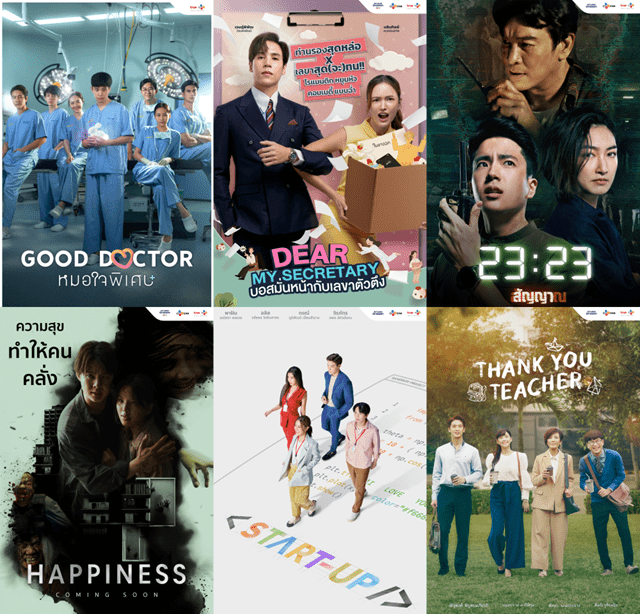
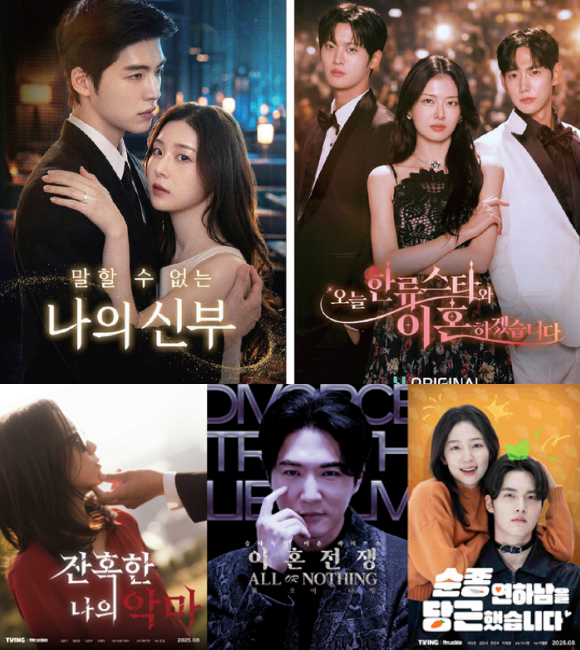
delves into the background of short-form growth, the film industry's perspective on it, the possibility of coexistence between short-form and the film industry, and the future direction the film industry aims to take. [THE FACT|Reporter Park Ji-yoon] Short-form, which typically refers to short vertical videos ranging from 15 seconds to 3 minutes, has become an indispensable part of daily life.This is thanks to the spread of a mobile-centric media environment and changes in content consumption patterns, where delivering entertainment and information in a short period has become a new competitive advantage. Consequently, short-form has established itself as one of the core video formats, moving beyond a mere content genre in the video market that was dominated by long-form content.Furthermore, short-form content is influencing the entire media industry, from how content is discovered and selected to production, distribution, and advertising. So, when and how did it emerge, how did it spread to major platforms, and what factors led it to become mainstream in the content market?The history of short-form dates back to 2013. At that time, Vine showcased 6-second looping videos, demonstrating the potential for short videos to be consumed as independent content. In 2014, lip-syncing or dancing to music through Musical.ly led to a culture of creating and sharing short videos.The full-scale growth of the short-form market began in 2016 when China's ByteDance launched Douyin and the following year, TikTok. TikTok, which integrated Musical.ly in 2018, expanded its user base by emphasizing personalized algorithms and a consumption model centered on vertical videos.In particular, the structure of continuously watching videos that match one's preferences simply by swiping up and down on the screen, without separate searching or following, lowered the barrier to entry for content consumption and fostered a participatory platform where users create and share videos themselves.As the short-form market rapidly grew, centered around TikTok (top), existing video platforms like YouTube and Instagram also introduced related services one after another. /Each LogoAs the short-form market rapidly grew around this, existing video platforms also introduced related services one after another. YouTube launched Shorts in some countries in 2020 and expanded its service to the global market, including Korea, in 2021. Instagram, which was primarily a photo and image-centric social media, also expanded the proportion of video content by launching Reels in 2020.YouTube sought a differentiation strategy by connecting existing YouTube ecosystems with short-form content, allowing for short edits of existing content or the creation of videos specifically for Shorts.Thus, short-form transcended the success of individual platforms like TikTok to become a core content format commonly offered by major platforms, with each platform strengthening its market competitiveness by leveraging its existing user base and content ecosystem.In parallel, the influence of short-form has extended to existing video content industries such as dramas and movies, bringing about changes in production and distribution methods. Short dramas, which first grew in China and then landed in Korea after traversing the global market, are a prime example.Around 2018 in China, vertical micro-dramas optimized for mobile environments emerged, featuring short episodes lasting from tens of seconds to a few minutes, connected across multiple installments. Subsequently, as global platforms like Rilshort and Dramabox grew, the short drama production and distribution model originating in China also took root in overseas markets.In Korea, Fox Media launched 'Top Reels,' the nation's first specialized short drama platform, in March 2024, and announced its market entry by releasing original self-produced works such as 'My Revenge Partner' and 'Acquired Four Men.' Following this, 'Beagleu' by SpoonLabs and 'Shortcha' by Watcha were released in the same year, intensifying competition among domestic short drama platforms. Watcha also showcased the potential of the domestic short drama market by presenting its own original content, including 'The Kiss of the Most Painful in the World,' through Shortcha.While the early domestic short drama market was primarily formed around specialized platforms, in 2025, the market expanded further with the participation of existing OTT providers in production. TVING released works with episode lengths of 1-2 minutes, such as 'You Are the Villain in My Work' and 'The Neighbor Killer,' through its self-produced short-form content 'TVING Short Original' in the same year.This is significant not only for providing short edits of key scenes from existing dramas or variety shows but also for directly planning and producing original content optimized for the short-form format.The domestic short drama market has moved beyond importing and distributing foreign content to forming a new industrial domain through self-production by domestic platforms and the participation of existing OTT services. Regarding this, a distribution company official stated, "The biggest factor is the change in viewers' content consumption patterns as the mobile-centric media environment has become commonplace." . /Each LogoAs such, the domestic short drama market has moved beyond importing and distributing foreign content to forming a new industrial domain through self-production by domestic platforms and the participation of existing OTT services. The diversity of content is also expanding by incorporating Korean-style materials and story structures into the short-form format, utilizing existing IPs such as webtoons and web novels, and domestic production personnel.The growth of short-form is not merely a temporary trend due to the shortening of video length. It is the result of a shift in consumption patterns, from actively searching for and selecting content to discovering and being recommended videos that match one's preferences, driven by the advancement of mobile environments and recommendation algorithms, coupled with a consumption tendency that prioritizes time efficiency.According to the '2025 Content Usage Behavior Survey' by the Korea Creative Content Agency, the short-form usage rate among 6,554 individuals aged 10 to 65 nationwide was 58.6%, with the primary reason for use being that it can be watched without burden due to its short length. Data released by YouTube in 2024 also shows a 50% year-on-year increase in the number of channels uploading Shorts globally.Short-form is now beyond a new consumption culture, forming its own production and distribution market, and is bringing about changes in existing video industries such as dramas and movies. In particular, even in the film industry, which seemed distant from short videos, short-form is breaking down the boundaries of the existing content market with new attempts such as theatrical screenings and self-production.In this regard, a distribution company official told , "The biggest factor is the change in viewers' content consumption patterns as the mobile-centric media environment has become commonplace. Viewers have become accustomed to selecting and consuming content at their desired times in their daily lives, rather than watching content at fixed times and places."He added, "Short-form is content optimized for this consumption environment, based on its short running time, fast-paced development, and high immersion. Its competitiveness lies not only in the shortening of video length but also in the development of its own narrative grammar that provides conflict, twists, and emotional rewards within it. Furthermore, it has established itself as an independent content market through the convergence of the growth of global platforms and changes in the production and distribution environment." [Film Industry Also Embraces Short-Form 2] Direct Production, Vertical Cinema Screenings... Challenges Continue[Film Industry Also Embraces Short-Form 3] Beyond Familiar Grammar... Will It Become a New Growth Engine?jiyoon-1031@tf.co.kr[Entertainment Department | ssent@tf.co.kr]