[TF Interview] Director Lee Chang-dong's 'Possible Love' Compares the Value of Labor and Capital to Love
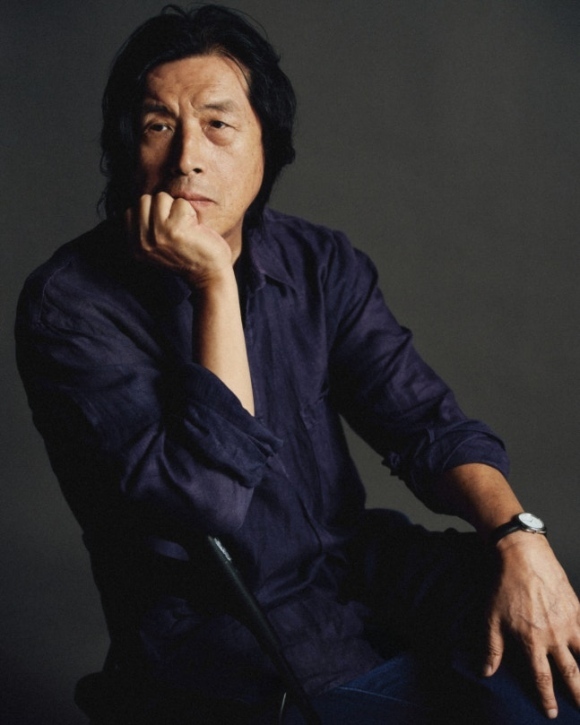
Starting with the story of laid-off workers... Completed after the creator's ethical considerations"Labor is a fundamental issue of life"... The value and identity of humans in the AI eraDirector Lee Chang-dong, who is releasing his first new film in 8 years with Netflix's new movie 'Possible Love,' met with
and conducted an interview about the work. /Netflix[THE FACT|Reporter Kim Saet-byeol] A man who shakes people's hearts and keeps them interested. Is it romance or an affair? Director Lee Chang-dong did not define the subtle atmosphere in 'Possible Love' as either. Instead, he likened it to the nature of capital. Like capital that chases profits and shakes others' lives in the process, he looked into the other side of an act that shakes someone's heart without a specific purpose. In this way, 'Possible Love,' which encompasses love, labor, and the cracks in relationships, asks questions to the audience by looking at familiar emotions and realities from an unfamiliar perspective.Director Lee Chang-dong recently met with at a cafe in Samcheong-dong, Jongno-gu, Seoul, and conducted an interview regarding the release of Netflix's new movie 'Possible Love' (written by Oh Jeong-mi, directed by Lee Chang-dong). Returning with a new work after 8 years, the director expressed his feelings, saying, "I'm curious and excited to see how many viewers will receive it," and shared various stories about the work.'Possible Love' is a story about two couples, a laid-off worker and his wife, and a documentary director and her husband, who meet to produce a documentary and confront their different lives and hidden desires. After being screened in domestic theaters for about two weeks in September, it was released worldwide on Netflix on the 6th.Director Lee first thought of this story about 10 years ago. He researched and wrote a scenario to capture the lives of laid-off workers, and even reached the production stage, but stopped at the last moment. The criteria he considers important when making a movie are not interest, box office success, or good reviews. He first pondered what meaning this story has for people living in the same era as himself and whether it can have meaning as a film itself.For him, the issue of labor was not just about specific events or laid-off workers. The perception that workers' rights and values are no longer recognized began to be revealed socially, and conflicts and divisions arose among workers in the process. Director Lee recalled that the most difficult point for laid-off workers at the time was the fact that no one recognized their rights. Viewing this as collective trauma, he thought it was necessary to bring out this story in an era where the value and rights of labor were fundamentally changing.However, having meaning did not immediately lead to making a movie. The closer he got to the suffering of living people, the more he questioned whether his position as a storyteller, not a participant, was honest. Director Lee explained that he could not shake off the question, "How honest is it for me to represent these people's stories?" and eventually gave up on production.Director Lee Chang-dong revealed that he had conceived the story of laid-off workers, the subject of Netflix's new movie 'Possible Love,' 10 years ago but abandoned it for various reasons, and was able to prepare it anew through writer Oh Jeong-mi. /NetflixThe reason he could start the work again was a suggestion from writer Oh Jeong-mi. She proposed to include the story of a documentary director trying to capture the lives of laid-off workers. Director Lee judged that he could deal with the questions he had within the work through the perspective of a documentary director who conveys the lives of others. For him, this was not just a device to expand the narrative but a way to reflect on the creator's position and ethics together.The documentary director Yeji (played by Jo Yeo-jeong) tries to capture the stories of laid-off workers while living with her wealthy husband. Director Lee said he had no intention of criticizing Yeji as a character of a specific class. Rather, he saw it as connected to the position of creators, including himself, who can only work by borrowing the power of capital. He explained that Yeji's attempt to secure her independence by receiving grants aligns with the characteristics of creators who rely on capital while trying to maintain their own voice within it.Therefore, 'Possible Love' does not simply devolve into a confrontation between the rich and the poor. Director Lee aimed to show the process of Yeji's documentary production, which conveys the pain and frustration of laid-off workers, while also depicting how the power of capital affects the details of everyday life. He argued that if good and evil are divided and confronted, it is easy to immerse oneself in the story and feel catharsis, but real life is not that simple."No matter how rich someone is or how oppressed they are, they are not inherently divided into good and evil. Our lives are not that simple. I thought the audience would have no choice but to feel and think in various ways."The title of the work, 'Possible Love,' also stems from this question about relationships. It was not a title decided from the beginning. When he was planning around the story of laid-off workers, the title was different, but it came to mind intuitively when the documentary director and her husband appeared, and he easily agreed with the writer. Director Lee thought that the title itself, which is a familiar phrase but feels strange, could be a question.For him, love is not limited to emotions between men and women. It is also the force that maintains various connections formed between people, such as the relationship between workplaces and workers, relationships between colleagues, and marital relationships. If asked what can hold relationships together when they are broken and ignored, the answer ultimately leads to love. Yeji's desire to capture the lives of others can also be read as an effort to love them. Director Lee believed that the meaning of work can change depending on the attitude of trying to love others, not only for creators but also for those involved in the stories and relationships of others.Director Lee Chang-dong not only raises questions about various relationships through Netflix's new movie 'Possible Love' but also explains Jo In-sung's actions by likening them to the nature of capital. /NetflixThe film also poses questions about romance through the relationship of the two couples. Miok (played by Jeon Do-yeon) meets a couple from a different world whom she would not normally have met, and her heart is shaken by Sangwoo's (played by Jo In-sung) kindness. Director Lee did not see this as merely an emotion of an affair. He wanted to capture the difficulty of resisting the illusion of romance that society creates for individuals and protecting oneself.In particular, he explained that Sangwoo's act of shaking someone's heart without a specific purpose resembles the nature of capital. Capital chases profits not necessarily to obtain something essential, and in the process, it causes restructuring and collective layoffs. Sangwoo may also have a purpose in the act itself of making someone fall in love and keeping them interested in him. On the other hand, Miok and Hoseok (played by Sol Kyung-gu) have a relationship so familiar from being together for so long that they are unaware of their love for each other. Director Lee saw the scene at the end where the two sit together on a bench, drink, and confirm each other as another form of love.The issue of the value of labor underlies the work that talks about relationships and love. Director Lee viewed labor not as a mere economic issue but as a fundamental problem that constitutes human life. He argued that now, when discussions are underway about whether AI can replace human labor, it is rather necessary to rethink the meaning of labor.He emphasized, "Just because people don't care about the value of labor doesn't mean the value of labor disappears. Without labor, this world cannot function." He then posed the question of what would happen if humans no longer worked and could not know what kind of person they were or were not recognized by society. He explained that the center of identity, recognizing who one is and distinguishing oneself from others, lies in what one does for a living."The issue of labor is not just an economic issue, but a fundamental issue of our lives. I believe labor is at the center of what I do, and what meaningful role I play for my family and society."Director Lee Chang-dong hoped that through the themes raised in Netflix's new movie 'Possible Love,' many people would think about AI and the value of labor at least once. /NetflixThe director's concern is also reflected in the film's format. The work draws inspiration from the commandment "Do not covet your neighbor's goods" from director Krzysztof Kieślowski's 'Dekalog' series. As it deals with capital and labor, he judged that it could be connected to the meaning of coveting others' possessions in a capitalist society. Capitalism constantly stimulates the desires of others, and people live by chasing what others deem good, even if it is not something they truly need. Director Lee sought to reflect on the essence of capital through that commandment.The perspective of Cheol (played by Choi Jeong-woon) and CCTV are devices that expand the themes of relationships and power. Director Lee set Cheol as a somewhat transcendent child who seems to know everything but is trapped in his own world. There was a suggestion from the co-production team to include a witness-like figure in the work, similar to the different characters appearing in each episode of the 'Dekalog' series, and Cheol took on that role. By connecting CCTV and Yeji's camera, he depicted how power relationships between people are formed depending on who is watching and who is being watched.So, can the movie actually restore and facilitate communication in human relationships? Director Lee said he cannot conclude the role of film himself. However, he noted that by holding up the camera, Yeji helps Hoseok to express the anger and despair that have been building up inside him for a long time. He suggested that one might experience initial healing by confiding stories that were difficult to share with others in front of the camera and crying."If a filmmaker is skeptical about their work, they can be. Still, they can find hope within it. I don't know if the documentary Yeji is filming is completed, but I believe it played a role in healing during the process."sstar1204@tf.co.kr[Entertainment Department | ssent@tf.co.kr]