
Lee Jung-jae's agency refutes allegations of preferential settlement..."Business judgment"
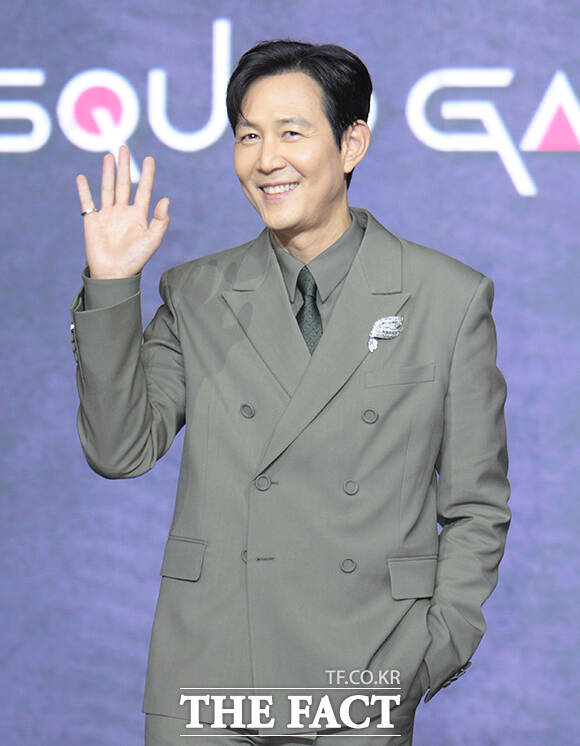 Allegations of preferential treatment in a contract for the settlement of the entire amount exceeding 4 billion won in sales"Deep regret over biased reporting... legal action"Artist Company, the agency of actor Lee Jung-jae, has announced legal action, fully refuting allegations that Lee Jung-jae received preferential treatment in the profit distribution process with the company. /THE FACT DB[THE FACT|Reporter Choi Soo-bin] Allegations have been raised that actor Lee Jung-jae unfairly profited from the profit distribution process with his agency, but the agency has directly refuted them.Artist Company, Lee Jung-jae's agency, issued an official statement on the 18th regarding Dispatch's report that questioned the profit distribution structure between Lee Jung-jae and the company, stating, "We believe this report is in the nature of 'precision targeting reporting' aimed at a specific individual," and "We express our strong regret."Earlier today, Dispatch reported that Lee Jung-jae signed a contract with Artist Company with the condition that profits would be settled at a 9:1 ratio up to 4 billion won in sales, and he would receive the entire amount exceeding that. It was pointed out that this structure differs from the settlement ratios applied to other Artist Company actors, including Yeom Jung-ah, Lim Ji-yeon, Kim Hyeyoon Jo Yi-hyun, and others.In particular, Dispatch claimed that Lee Jung-jae received approximately 20 billion won for his appearance in seasons 2 and 3 of the Netflix series 'Squid Game,' but only about 400 million won went to Artist Company due to a profit distribution cap clause. It was stated that without this clause, the company could have secured an additional profit of approximately 1.6 billion won.In response, the agency stated, "Fellow actor (Jung Woo-sung), who served as an internal director with Lee Jung-jae, also did not receive a separate executive salary, and both actors were subject to the same settlement contract terms," adding, "The fact that the fellow actor recently left the company does not change the fact that the same contract terms were applied to both actors."Regarding the settlement of 'Squid Game' appearance fees, the agency explained, "The contracts for seasons 2 and 3 and overseas agency work were handled by CAA in the United States, and the corresponding costs were paid to CAA, the contracting party," and "Although our company did not directly handle the contracts or overseas agency work related to these productions, we received profit distribution according to the existing settlement contract."Furthermore, regarding the claim that the company could have earned an additional 1.6 billion won, the agency emphasized, "This calculation is based on the assumption that only the cap clause in the settlement contract was removed, and the remaining contract terms were maintained," and "It is not possible to determine this as preferential treatment based solely on the cap clause."Finally, the agency stated, "The fact that the same contract terms were applied to both actors, the objective basis for calculating rent, and other key points that our company explained in advance were not sufficiently reflected in the report," and "We plan to take necessary legal action, including claims for correction of reporting, counter-reporting, and damages, after closely reviewing whether there was an omission of important counter-facts, distortion of facts, and defamation in this report."The following is the full official statement from Artist Company.Hello. This is Artist Company.We would like to state our position regarding the article "If sales exceed 4 billion won, 10:0... Lee Jung-jae, majority shareholder's selfish management" reported by Dispatch on November 18, 2026.We have provided specific explanations regarding the structure of actor settlement contracts, the circumstances of the head office relocation, the basis for rent calculation, the economic substance of the Benabeauty contract, and the background of other investments and business restructuring in response to Dispatch's interview requests. However, the article only formally quoted some of the explanations and was written to focus a negative impression on actor Lee Jung-jae without sufficiently conveying the comparative facts and objective grounds necessary to judge the validity of the explanations.We believe this report is in the nature of 'precision targeting reporting' aimed at a specific individual, and we express our strong regret. To enable shareholders and stakeholders to accurately assess the facts, we present our position on the key issues below.1. The profit distribution cap is not preferential treatment for actor Lee Jung-jae alone.The article reported as if the profit distribution cap in actor Lee Jung-jae's settlement contract granted him special benefits using his majority shareholder status. However, the fellow actor who served as an internal director with actor Lee Jung-jae also did not receive a separate executive salary, and both actors were subject to the same settlement contract terms. The fact that the fellow actor recently left the company does not change the fact that the same contract terms were applied to both actors.Furthermore, the contracts for 'Squid Game' seasons 2 and 3 and overseas agency work were handled by CAA in the United States, and the corresponding costs were paid to CAA, the contracting party. Separate agency fees were also paid for other overseas work through CAA. On the other hand, our company received profit distribution according to the existing settlement contract, even though we did not directly handle the contracts or overseas agency work related to these productions.Therefore, the appropriateness of the profit distribution cap should be judged by comprehensively considering not only the amount the company could have additionally received but also the actual work performer, cost burden, and the profits already distributed to the company.2. The calculation that '1.6 billion won would have been earned if there was no cap' is merely an assumption.The article claimed that the company could have secured an additional 1.6 billion won in profit and reduced operating losses by the same amount if there were no profit distribution cap. However, this calculation is based on the assumption that only the cap clause in the settlement contract was removed, and the remaining contract terms were maintained.Management contracts are concluded by comprehensively considering factors such as the actor's performance, exclusive contract period, settlement ratio, the company's investment and cost burden, and the economic value of maintaining the contract. In particular, given that actor Lee Jung-jae contributes the most to the company's sales and profits among its actors, it is not possible to determine this as preferential treatment based solely on the cap clause. We considered the appropriateness of related-party transactions when determining these contract terms and reviewed the opinions of external auditors.3. Operating multiple offices was an unavoidable measure during the management takeover process.The article reported as if our company incurred unnecessary rental expenses by operating multiple offices. However, at the time of signing the Raemongraein stock transfer agreement, the existing directors and auditors agreed to submit their resignations but failed to do so, causing disruptions in the management takeover and business handover.Consequently, we became involved in legal disputes, including filing a lawsuit for damages against the existing majority shareholder, and in the process, we unavoidably secured separate office space for normal business operations and work execution. The operation of multiple offices and the associated costs were not decisions made for the personal benefit of actor Lee Jung-jae but were unavoidable measures taken due to the non-fulfillment of the resignation obligation under the stock transfer agreement. Dispatch did not request specific explanations from us regarding these circumstances and did not reflect the content of the explanatory materials we provided in advance in the report.4. The Benabeauty contract was designed with priority on the company's profitability.The article described the contract with Benabeauty as a transaction to transfer the company's profits to actor Lee Jung-jae personally. However, actor Lee Jung-jae prepared for cosmetic brands and product development for a long time, established Benabeauty, and directly bore the related development costs. He also provided his portrait and name rights, global recognition, and business network, and invested significant time and effort in the actual business.Considering that Lee Jung-jae's typical advertising model fee is in the hundreds of millions of won, the minimum guarantee (MG) of 30 million won per year is a very limited amount. Initially, Lee Jung-jae's side even considered not receiving MG for the benefit of the company, but it was set at a minimum amount to consider tax issues related to providing rights for free.Under the contract, Benabeauty only receives a portion of the excess profit if the agreed-upon target operating profit is exceeded, and does not receive any performance-linked revenue other than MG until the target operating profit is reached. Furthermore, it is stipulated that the portion of excess profit not distributed to Benabeauty will be reinvested in the business.This contract structure was established based on the experience of the 'Monsieur J' cosmetics business that the company pursued with its actors in the past. At that time, the profit distribution ratio under the existing management contract was directly applied to the cosmetics business. However, this time, reflecting the past business's trial and error, the profit distribution ratio between the actor and the company was significantly adjusted, and the company was designed to secure the agreed-upon target operating profit first. This was a business judgment made to increase the company's profitability and business sustainability, not to grant preferential treatment to a specific actor.5. It is unfair to connect all of the company's business judgments to actor Lee Jung-jae's pursuit of personal gain.The article listed various matters of different natures, such as head office relocation, entry into the cosmetics business, sale of business divisions, stock price decline, and operating losses, and connected them to the conclusion of actor Lee Jung-jae's pursuit of personal gain. However, each transaction must be evaluated individually based on its timing, business purpose, counterparty, contract terms, and business necessity.In particular, the sale of the digital advertising division, which recorded operating losses for the past two years, was a decision made for business restructuring and focusing on new businesses, as explained during the interview process. It is important to be cautious in concluding that individual contracts are unfair solely based on the company's operating losses or stock price decline, or that the pursuit of personal gain by a specific individual is the cause.6. Expression of regret over biased reporting and legal action.We respect the legitimate reporting and criticism of the media. However, media criticism must also be based on accurate facts, thorough verification, and fair opportunities for rebuttal.This report was a matter for which our company prepared and submitted an explanatory document within a tight timeframe due to Dispatch's demand for a response on the same day, despite the lack of recognized urgent need for reporting. Nevertheless, key points explained in advance by our company, such as the fact that the same contract terms were applied to both actors, the objective basis for rent calculation, and Benabeauty's upfront investment and provision of rights, were not sufficiently reflected. Furthermore, matters not included in the prior inquiries were reported without additional fact-checking or requests for explanation.Given these circumstances of the interview and reporting, we have strong doubts as to whether the article was written and distributed according to a predetermined reporting direction, rather than the company's explanation being substantially reviewed. Accordingly, we plan to take necessary legal action, including claims for correction of reporting, counter-reporting, and damages, after closely reviewing whether there was an omission of important counter-facts, distortion of facts, and defamation in this report.Artist Company will continue to protect the interests of the company and its shareholders and provide responsible explanations based on accurate facts.Thank you.subin7134@tf.co.kr[Entertainment Department | ssent@tf.co.kr]
- HOT NEWS
- Lee Jung-jae's agency refutes allegations of preferential settlement..."Business judgment"
- Lim Young Woong fan club donates 3 million won to Kimchi Sharing Festival... total donations reach 25.16 million won
- Joyday Stick Yogurt Launches in Indonesia
- Tomorrow X Together (TXT), 'PERFECT STORM' (Comprehensive)
- Taiwan American Whiskey & Bourbon Festival Returns to Taipei to Celebrate America's 250th Anniversary

허블 정보
Copyright © 2017 Huvle All Rights Reserved
admin@huvle.com