
Somi Explains Her Black Outfit at I.O.I’s Reunion
The singer says she wanted to blend in with her bandmates after their contrasting stage outfits sparked criticism.
Jeon Somi has addressed criticism of her outfit at I.O.I’s reunion performance, saying she had no intention of drawing attention away from the other members.
The discussion began after the group appeared at the 2026 Melon Music Awards in Seoul on November 14. Somi wore a predominantly black outfit while the other members appeared in largely white looks, prompting some online viewers to question why her styling differed.
Speaking during a recent livestream, Somi said she preferred blending in with the group and had never wanted a prettier outfit than anyone else. Her explanation focused on the gap between how the clothes looked to viewers and what she had wanted from the performance.
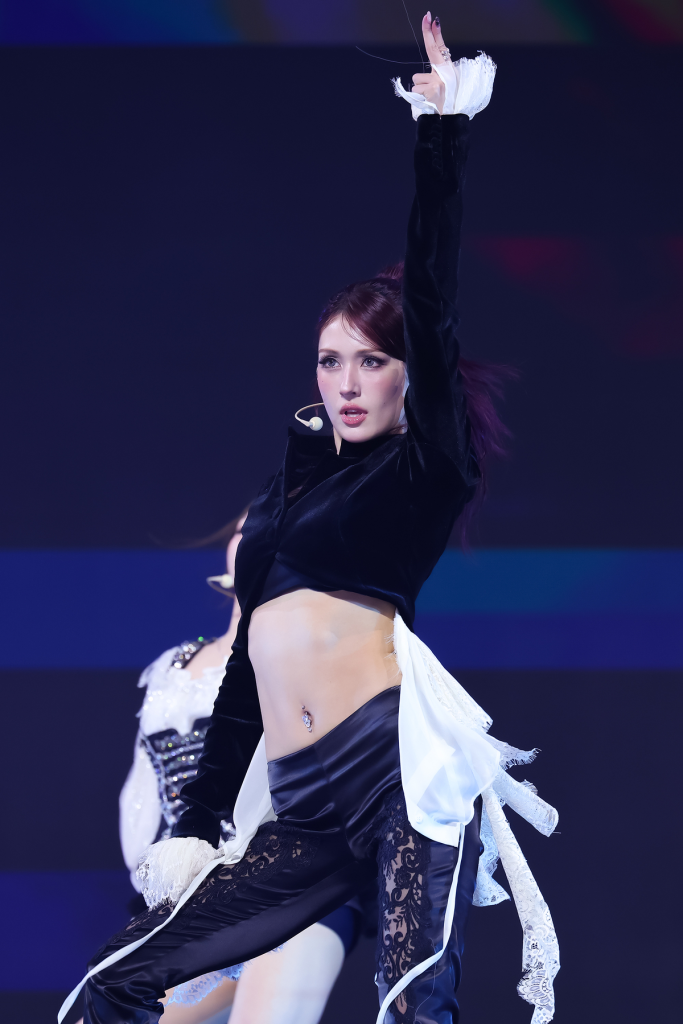
Somi Says the Members Shared a Stylist
According to Sports Kyunghyang, Somi said the members all worked with the same stylist for the awards appearance. She rejected the suggestion that she had dressed differently because she wanted to outshine her bandmates.
“I like blending in,” she said, explaining that standing apart from the others was not her goal.
She also described a different impression of the outfit from her own perspective. Rather than expecting the black look to dominate the stage, she had wondered whether it would make her less visible. She pointed to its lack of sparkling details when explaining that reaction.
Xports News also reported her remarks, including her statement that she had not wanted to wear something prettier than the other members. The account gives her response to the criticism, rather than a detailed explanation of how the final wardrobe was selected.
What the Performance Photos Show
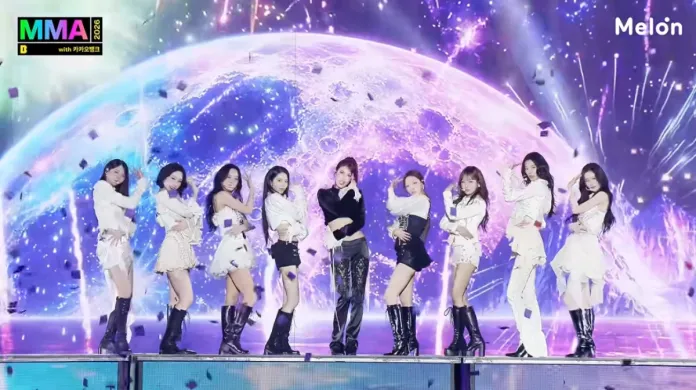
The awards photographs help explain why the contrast became a talking point. In a group image supplied by MMA, Somi stands near the center wearing a black cropped jacket and dark trousers, while white and pale fabrics dominate the surrounding outfits.
The styling is more varied than a simple black-versus-white description suggests, however. Other members also wear black boots, dark shorts or black panels. Somi’s look includes white fabric at the cuffs and hanging details, visually connecting it with elements elsewhere in the group.
Our analysis is that these shared details and the overall color contrast can coexist. An outfit may belong to a coordinated wardrobe while still standing out within the finished group image. That visual effect does not, by itself, establish what the performer intended or who made a particular styling decision.
Somi’s comments address the personal intention being attributed to her. They do not explain every stage of the wardrobe process, and they should not be read as a statement assigning fault to the styling team.
A Reunion Stage Becomes a Wardrobe Debate
The performance brought I.O.I together for “Whatta Man” and their reunion song “갑자기.” Those songs placed the group’s earlier identity alongside its current activities, making the appearance about more than an individual member’s solo image.
Coverage of the outfit disagreement consequently centers on a familiar tension in group performances: members can have distinct silhouettes and personalities while viewers still expect a recognizable collective look. There is no single visual formula for that balance, and audience preferences do not necessarily reveal the decisions made backstage.
Clothes have also shaped the conversation in our coverage of Shin Min-a’s costume debate in The Remarried Empress, where viewers judged how elaborate garments appeared on screen. Our report on Karina’s Milan fashion appearance similarly explored the way a complete look brings clothing and accessories together.
Those are different settings, but they offer a useful comparison: viewers encounter the finished image first. Explanations about its preparation arrive later, if they arrive at all. In Somi’s case, that later explanation is her own account of wanting to remain part of the group.
- HOT NEWS
- Top Tax Accountant Wonseok Han Confesses to AI Cheating... Also Acknowledged in Certified Public Accountant Exam
- Enhypen, new song 'I Want You' music video released
- "Christmas Excitement and Musical Fever," Suwon 'Something New Music Festival 2026'
- [TF Magnifying Glass] 'Mr. Trot 4' Identity Crisis Amidst Controversy... Resembles the Success Formula of Latecomers
- Jang Na-ra&Kim Hyeyoon 'You Are My Good Partner' [TF Photo Studio]

허블 정보
Copyright © 2017 Huvle All Rights Reserved
admin@huvle.com